Standard Meters vs Smart Meters: Which One Is Better?
Standard Meters is an important role in measuring electricity consumption for household and business use. These meters allow energy suppliers to keep an accurate record of electricity consumed, ensuring correct billing. While new technologies such as smart meters are gaining popularity, Basic Energy Meters are still widely used due to their simplicity and cost-effectiveness.
In this article we will discuss a complete guide of standard meters, how they work, their benefits and disadvantages and why they remain an essential tool for managing electricity usage.
Table of Contents
What are Standard Meters?
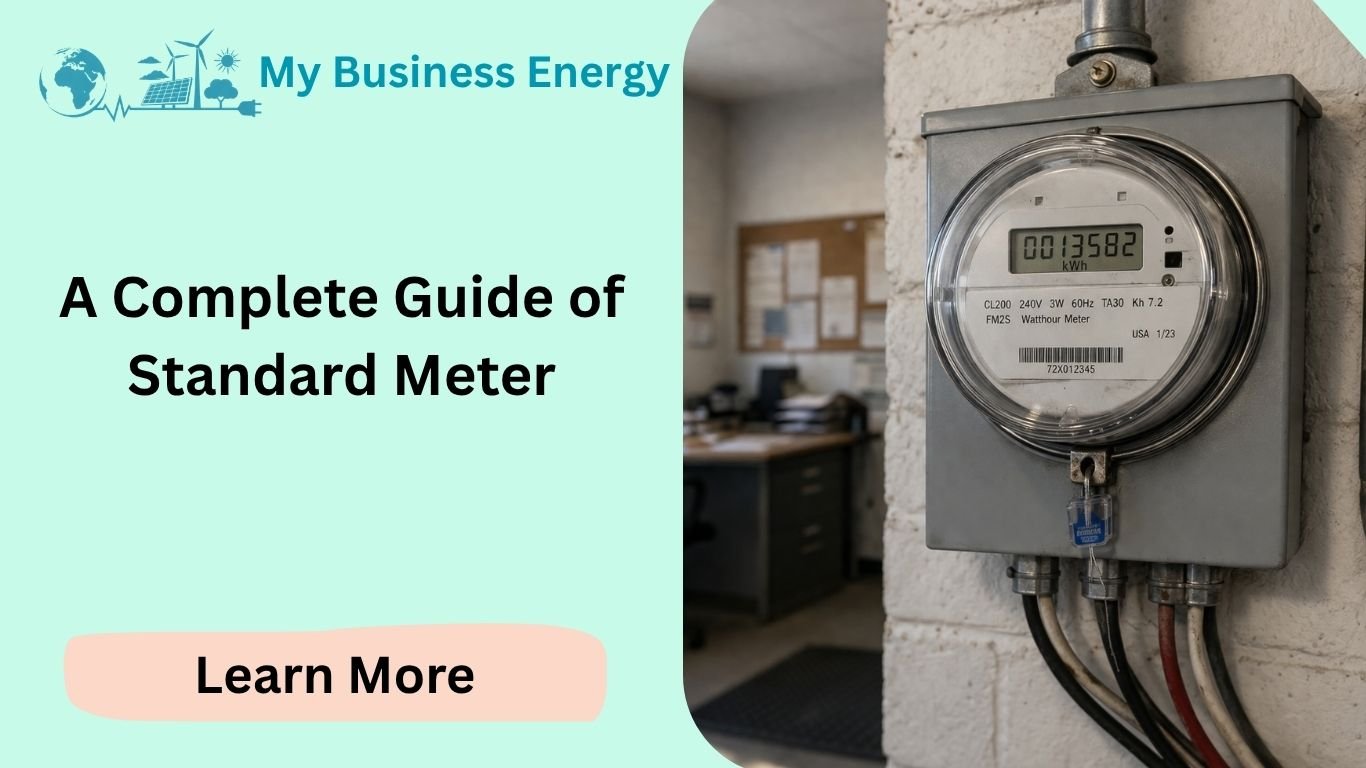
A Standard Meter measures the amount of electricity used by a household or business, recording energy consumption in kilowatt-hours (kWh). These meters continue to be the standard for utility billing because they are simple, reliable, and cost-effective.
By converting electrical current into readable values, they provide accurate data that helps energy companies determine the bill. Despite the rise of smart meters, standard meters are still commonly used due to their ease of service and affordability, especially in older homes and businesses. They ensure accurate measurement and billing of electricity usage.
How Standard Meters Work
Standard meters measure electricity usage by recording the flow of electrical current. Here is a very brief explanation of how they work
Electricity Flow: Electricity current goes through the meter from the power supply to your home or business.
Mechanical meters: A rotating disc moves when electricity passes through it, with the speed of spinning indicating energy use.
Digital meters: the current is measured by electronic sensors and the consumption is shown as a number on a screen
Kilowatt-Hour (kWh): The meter keeps a record consumption in kilowatt-hours (kWh), which represents 1 kilowatt of power used for one hour.
Recording and Billing: The meter tracks the total usage and sends the data to the utility company for billing based on the recorded kWh.
Basic Energy Meters offer a straightforward way to measure electricity consumption, ensuring accurate billing.
How to Read a Standard Meter
Reading a standard meter is a simple process that helps you track your energy or water usage.
- Locate the Meter: Find your meter, typically installed outside your home or in a utility room. It may measure electricity, gas, or water usage.
- Understand the Display: Most standard meters have either a digital or dial display. Digital meters show numbers, while dial meters have clock-like dials.
- Read the Numbers: For digital meters, write down the numbers from left to right, ignoring any red numbers or those after a decimal point. For dial meters, read each dial from left to right, noting the lower number if the pointer is between two digits.
- Record Regularly: Take readings at regular intervals (e.g., monthly) to monitor your consumption and identify any unusual spikes.
- Report or Compare: Share the reading with your utility provider if required or compare it to your previous readings to track usage trends.
Benefits of Using Standard Meters
Standard meters offer several advantages for households and businesses:
- Cost-Effective: Traditional Electricity Meters are generally cheaper to install and maintain compared to newer technologies like smart meters, making them a budget-friendly option.
- Simplicity: These meters are easy to use and understand. Whether mechanical or digital, standard meters provide straightforward readings of electricity consumption.
- Reliability: Basic Energy Meters have been used for decades and are highly reliable in accurately measuring energy usage. They are tested and proven to work effectively in various environments.
- No Need for Internet Connection: Unlike smart meters, which often require internet connectivity to send data, standard meters do not rely on a network connection, making them easier to maintain.
Challenges and Limitations of Standard Meters
While Basic Energy Meters offer several benefits, they also have some drawbacks:
- Lack of Advanced Features: Unlike smart meters, Traditional Electricity Meters do not track time-of-use or real-time energy consumption data. This makes it difficult for users to understand patterns in their electricity usage or optimize energy consumption during off-peak hours.
- Manual Meter Reading: Many Basic Energy Meters, especially mechanical ones, require manual readings. A utility worker must physically visit the property to read the meter, which can be time-consuming and prone to human error.
- Limited Data Reporting: Standard meters do not provide detailed reports or feedback on energy usage, such as identifying specific devices consuming the most power. This lack of data makes it harder for users to take actionable steps to reduce their energy consumption.
Types of Standard Meters
There are two main types of Basic Energy Meters used for measuring electricity consumption
- Mechanical Meters
These are the traditional type of meters, featuring a rotating disc inside the meter. As electricity flows through the meter, the disc spins faster with increased energy consumption. The number of rotations of the disc is used to calculate the total electricity usage. Mechanical meters are typically read manually, with the dial indicators providing the total consumption in kilowatt-hours (kWh). - Digital Meters
Digital meters are modern versions of standard meters. Instead of a rotating disc, they use electronic sensors to measure electricity flow. The results are displayed digitally on a screen, making them easier to read and often more accurate than mechanical meters. Digital meters can also include additional features, such as the ability to store multiple readings or offer basic time-of-use tracking.
Ofgem Regulations for Standard Electricity Rate Meters
Ofgem regulates the installation, maintenance, and accuracy of standard electricity meters to ensure fair billing for consumers.
- Consumer Protections: If there is a dispute over meter readings or bills, consumers can escalate to Ofgem or the Energy Ombudsman for resolution.
- Meter Installation and Maintenance: Suppliers must follow specific guidelines for installing and maintaining meters to ensure they are safe and accurate.
- Accurate Billing: Consumers must be billed based on actual usage, and they have the right to request an independent meter test if they suspect inaccuracy.
- Price Caps and Rates: Ofgem sets price caps for electricity tariffs, limiting how much suppliers can charge for energy consumption.
Standard Meters vs. Smart Meters
Standard Meters and Smart Meters are both used to measure electricity consumption, but they have key differences. Here is a comparison to help you understand each type
Feature | Standard Meters | Smart Meters |
Measurement Method | Mechanical (spinning disc) or digital (readout) | Electronic sensors and real-time data display |
Cost | Generally cheaper to install and maintain | Higher installation and maintenance costs |
Real-Time Monitoring | No real-time data access | Offers real-time monitoring of energy usage |
Installation | Simple installation process | More complex installation, sometimes requiring extra equipment |
Understanding the Application of Traditional Electricity Meters
Traditional Electricity Meters are applied in various settings to measure electricity usage, ensuring accurate billing and efficient energy management.
- Residential Homes:
Standard meters are most commonly installed in residential homes. They measure the amount of electricity consumed by the household over a billing cycle. The data collected from these meters is used to calculate the homeowner’s energy bill, ensuring they are charged according to actual usage.
- Commercial and Small Businesses:
Small businesses and commercial properties also use standard meters to monitor electricity consumption. These meters provide essential data to ensure accurate billing for the energy used by the business. They help in managing energy costs and budgeting for utility expenses. - Industries and Large Buildings:
In larger industrial settings, Traditional Electricity Meters may be used alongside more advanced metering systems. While smart meters are more common in such applications, Traditional Electricity Meters can still be used to measure energy consumption in some cases, particularly in smaller buildings or older facilities. - Utility Companies:
Utility companies rely on Basic Energy Meters to track and bill customers for the electricity they consume. Technicians regularly visit properties to read mechanical or digital Traditional Electricity Meters and collect data for billing. - Billing and Revenue Collection:
Standard meters play a crucial role in the billing process. Once the meter’s reading is recorded, it is sent to the utility company to generate an invoice based on the customer’s energy consumption in kilowatt-hours (kWh). This helps ensure accurate billing and prevents overcharging or undercharging.
Final Thoughts
Standard meters are a reliable, cost-effective way to measure electricity usage, providing accurate readings for billing. While they lack advanced features like real-time data tracking and remote monitoring found in smart meters, they remain a practical option for many consumers.
Standard meters ensure fair billing and can still help with basic energy management. However, as energy needs evolve, considering smart meters for enhanced features may be beneficial. Overall, Traditional Electricity Meters continue to play an important role in the energy sector, offering simplicity and reliability.
If you want to learn more about Busines Electricty Guide please visit our website.
FAQs
This guide helps you choose the right standard meter for your household and business, covering its functionality, benefits, and how it compares to smart meters.
Q1: Can standard meters track real-time energy usage?
No, standard meters do not track real-time energy consumption. Unlike smart meters, they provide total energy usage over a billing period without offering real-time data access or insights into consumption patterns.
Q2: What types of businesses typically use Basic Energy Meters?
Small businesses and commercial properties often use standard meters to monitor their electricity consumption. They help manage energy costs and ensure accurate billing for the energy used by the business.
Q3: How do I maintain my standard meter?
Standard meters generally require minimal maintenance. However, it’s important to have them checked regularly by a utility company to ensure they are working properly. If the meter appears damaged or gives inconsistent readings, you should contact your utility provider for assistance.
Q4: How accurate are Traditional Electricity Meters
?
Standard meters are highly reliable and accurate in measuring electricity consumption. However, older mechanical meters can wear out over time, leading to potential inaccuracies. Regular maintenance ensures that meters continue to provide accurate readings.
Q5: What happens if my standard meter is faulty or giving incorrect readings?
If your standard meter is faulty or giving incorrect readings, you have the right to request an independent test through your utility provider. If the meter is found to be inaccurate, your utility company will adjust your bill accordingly.