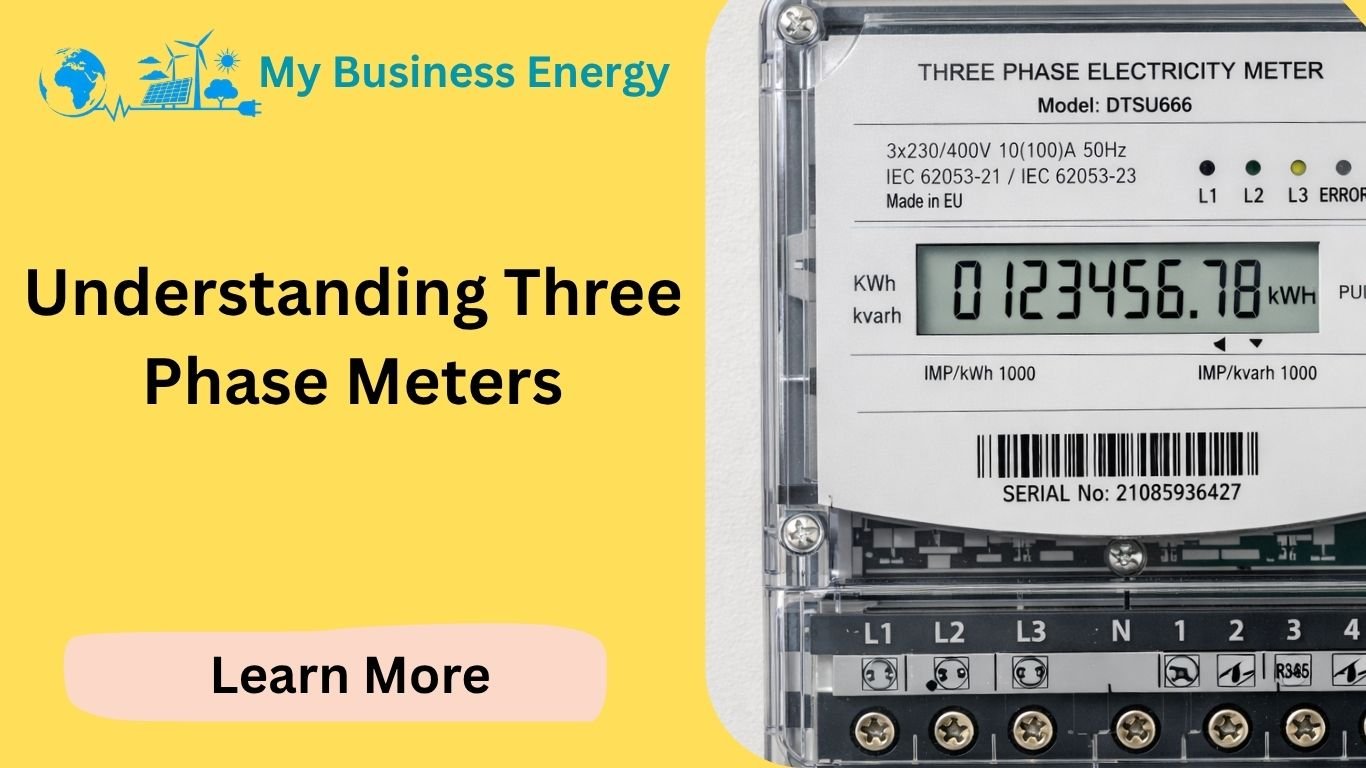
Three Phase Meter UK: Complete Business Guide
A three phase meter is used by businesses that need a higher and more stable electricity supply than a normal single phase setup. In the UK, this type of meter is common in factories, workshops, restaurants, warehouses, large offices and sites using heavy machinery.
This guide explains what a three phase meter is, how it works, how to read it, when a business may need one, installation requirements, switching suppliers and key cost factors.
What is a Three Phase Meter UK?
A 3-phase electricity meter is a device used to measure electricity consumption in a system that uses three phase power. This type of power supply is mostly found in commercial and industrial properties because they can support high electrical loads and large machinery.This helps business owners understand how much electricity their operations use.
3 phase meters provide accurate energy readings for systems that require high power. They help businesses manage electricity usage, track energy costs, and maintain efficient power distribution.
How Does a Three Phase Electricity Supply Work?
A three phase electricity supply works by using three separate electrical phases instead of one. These three phases deliver power in a more balanced and continuous way, which makes the supply stronger and more stable than a normal single phase connection.
In simple terms, a single phase supply is usually enough for small homes and light electricity use. A three phase supply is more suitable for businesses that use heavy equipment, large motors, commercial ovens, pumps, compressors, air conditioning systems, lifts or other high-power appliances.
Because the power is shared across three phases, the electrical load can be distributed more evenly. This helps reduce pressure on one single supply line and supports smoother operation of machinery and equipment.
For UK businesses, three phase electricity is commonly used in factories, warehouses, workshops, restaurants, commercial kitchens, large offices and industrial sites. If a business is using more electricity than a single phase supply can safely support, it may need to discuss a three phase supply or upgrade with its electricity supplier, qualified electrician or local Distribution Network Operator.
How to Read a Three Phase Meter
- Locate the Display – Check if it is digital or analog.
- Identify Phases – Look for L1, L2, and L3 readings.
- Read Energy Consumption – Note total kWh on digital meters or read dials left to right on analog meters.
- Check Voltage and Current – Optional on digital meters for each phase.
- Record Data – Track readings over time to monitor usage and detect issues.
Example:
If a digital meter shows L1 = 700 kWh, L2 = 350 kWh, L3 = 835 kWh, the total energy consumption is 700 + 350 + 835 = 1885 kWh.
Benefits of 3 Phase Meters for Businesses
Three-phase electricity meters offer several benefits for businesses:
- Accurate Energy Measurement:They precisely capture the power consumed through all the three phases.
- Better Cost Control: Organizations can keep an eye on their energy consumption and minimize the wastage of energy to lower the cost.
- Improved Usage Monitoring The meters can not only measure the usage of power but they also can detect the imbalance of voltage or any unusual power consumption.
- Supports Heavy Equipment Reliable and continuous power is what heavy equipment and machinery need in order to operate efficiently.
Common Problems with Three Phase Meters
Common problems with Three-phase electricity meter include:
- Incorrect Readings – Can occur due to wiring issues or meter faults.
- Phase Imbalance – Uneven load across phases can affect accuracy and equipment performance.
- Overloading – Exceeding the meter’s capacity may cause damage or errors.
- Connection Faults – Loose or corroded connections can disrupt readings.
Types of Commercial Three-Phase Meters
There are two common types of commercial three phase meters.
Electromechanical Meters: Working on the principle of a rotating disc, the traditional meters are the ones considered the simplest, longest lasting, and most trustworthy when only basic monitoring is required.
Electronic (Digital) Meters: Utilizing digital technology for measurement, these up- to- date meters are very accurate in their readings, besides indicating voltage and current, they also come with smart features for real time monitoring and remote data access in many cases.
Cost Factors of Three Phase Meters
The cost of a three-phase electricity meter depends on several factors:
- Meter Type – Electromechanical meters are cheaper, digital meters with smart features cost more.
- Accuracy Class – Higher accuracy meters are more expensive but provide precise readings.
- Capacity – Meters designed for higher voltage or current ratings cost more.
- Features – Additional features like remote monitoring, data logging, and communication options increase the price.
- Brand and Warranty – Established brands with longer warranties typically charge more.
Difference Between Economy 7 meter and 3 Phase Meters
Understanding the difference between an Economy 7 meter and a 3-phase meter is essential for choosing the right electricity setup, as each is designed for different usage needs and can significantly impact energy costs and efficiency.
Feature | Economy 7 Meter | Three Phase Meter |
Purpose | Designed for domestic use with time-of-use rates | Measures electricity in commercial/industrial three phase systems |
Power Supply | Single phase | Three phase |
Cost | Generally low | Higher due to capacity and features |
Energy Measurement | Records energy separately for off-peak (7 hours) and peak periods | Measures total energy across three phases |
Installation Process for Three Phase Meters
In the UK, three phase meter installation or supply upgrade should be handled by qualified professionals, the appointed supplier, meter operator, or the relevant Distribution Network Operator where required. A business should not attempt to install, rewire, remove, or modify a three phase meter itself.
The process usually starts with checking the property’s current electricity supply and business load requirements. If the existing single phase supply is not suitable, the business may need to contact its electricity supplier or local Distribution Network Operator to discuss a three phase upgrade.
The installer or relevant operator will assess the site, confirm the required capacity, check access to the meter position, and make sure the installation meets UK safety and technical requirements. After installation, the meter should be commissioned, tested, and recorded correctly so that billing is based on accurate meter data.
Before starting the process, businesses should keep their MPAN, current meter readings, meter serial number, recent electricity bill, and site load details ready. This helps the supplier or network operator handle the request more smoothly.
Can You Switch Suppliers With a Three Phase Meter?
Yes, businesses can usually switch electricity suppliers with a three phase meter. The process is similar to switching a standard business electricity supply, but the new supplier may need accurate meter and usage details before providing a quote or completing the switch.
Before switching, check your current business energy contract, end date, notice period, standing charge, unit rate and any exit fees. You should also keep important details ready, such as your MPAN, meter serial number, current meter readings, meter type and recent electricity usage.
In most cases, the physical electricity network does not change when you switch supplier. Your new supplier takes over billing and supply arrangements, while the local Distribution Network Operator continues to manage the electricity network in your area.
A three phase meter can continue recording your electricity usage after the switch. Your future bills will then be based on the new supplier’s agreed rates and contract terms.
Switching suppliers may help a business reduce electricity costs, especially if it uses high levels of power. However, the best deal depends on your usage pattern, contract length, unit rates, standing charges and overall business energy needs.
How to Choose the Right Three-phase Electricity Meter
Choosing the right meter begins with matching the voltage, current, and load capacity of a three, phase meter to your system. Select a meter whose accuracy class will ensure you get the most precise measurement of energy consumption.
A meter with a digital display showing kWh voltage current, and phase details would best suit your needs. Besides, you may take a smart meter into consideration as it has functionalities like remote monitoring, data logging, and integration with energy management systems.
Besides that, the meter should be safe, and it must be made in accordance with the safety standards in the UK. Besides, it should be from a reputed manufacturer who can offer a reliable warranty and technical support.
Future of Smart Three Phase Meter Technology
The future of smart three phase meters is expected to focus on better energy visibility, accurate billing, remote meter reading, and improved energy management for businesses. Smart meters can help businesses understand when electricity is being used, reduce estimated bills, and support more flexible energy tariffs where available.
For businesses with high electricity demand, smart meter data can make it easier to monitor usage patterns, identify unusual consumption, and plan energy-saving actions. This can be useful for factories, warehouses, restaurants, workshops, and other commercial sites that use heavy equipment or operate for long hours.
However, businesses should avoid assuming that every smart three phase meter will automatically provide advanced AI, cloud, or building-management integration. Features depend on the meter type, supplier, data access, and the system installed at the site.
Conclusion
A three phase meter is useful for UK businesses that need more stable and higher-capacity electricity than a standard single phase supply. It helps measure electricity usage accurately, supports heavy equipment, and gives businesses better control over energy monitoring and billing.
For factories, warehouses, workshops, restaurants, commercial kitchens and large offices, a three phase meter can support smoother operations and better long-term energy planning. Before installation or upgrade, businesses should check their electricity demand, current supply, meter details and future power needs.
The installation or upgrade should always be handled through the correct professional route, such as the electricity supplier, meter operator, qualified electrician or relevant Distribution Network Operator. Overall, understanding your three phase meter can help your business manage electricity usage, compare suppliers and control energy costs more effectively.
Business Electricity Guide, business electricity rates, types of electricity meters, business energy quote.
FAQS
This section answers key questions, how they work, where they are used, and why they are ideal for high-power homes and businesses, so you can understand your electricity setup quickly.
Q1: Can a home use a three-phase meter?
Yes, but it is usually needed only for large homes with high electricity demand or homes running heavy equipment like electric boilers, EV chargers, or industrial-style appliances.
Q2: Why is a three-phase system better for high-power applications?
Three-phase systems deliver more continuous and stable power, reduce energy losses, and allow heavy machinery or large appliances to operate efficiently.
Q3: Where are Commercial Three-Phase Meters
used?
They are commonly used in factories, large commercial buildings, data centers, and big residential complexes where high power is required.
Q4: How do businesses benefit from three-phase meters?
Businesses can monitor energy consumption accurately, manage peak and off-peak usage, and ensure that heavy machines operate efficiently, reducing electricity costs.
Q5: Are three-phase meters safe?
Yes, they are designed for high-power systems and include protections for overcurrent and incorrect wiring. Installation should always be done by a certified electrician.