
Business Electricity Unit Rates UK 2026: Compare Prices Per kWh
Business electricity unit rates show how much a company pays for each kilowatt-hour (kWh) of electricity used. In the UK, business electricity prices are different from domestic and household prices because business energy contracts are not protected by the Ofgem domestic price cap.
Your business electricity rate can depend on your location, meter type, annual electricity usage, contract length, supplier, and whether you are on a fixed, variable, deemed, or out-of-contract tariff. That is why businesses should compare the total annual cost, not only the unit rate.
Quick Answer: Average Business Electricity Unit Rates UK 2026
In 2026, average UK electricity business unit rates are usually around 24.7p to 25.7p per kWh, depending on business size, annual usage, postcode, meter type, supplier, and contract length.
A business should not compare the unit rate only. The daily standing charge, tariff type, contract terms, VAT, Climate Change Levy, and estimated annual cost can also affect the final electricity bill.
As a simple guide, micro and small businesses may pay around 25p per kWh, while medium and large businesses may receive slightly different rates based on usage and commercial quote details. These are guide prices only, and the most accurate rate depends on your business postcode and electricity consumption.
What Are Business Electricity Unit Rates?
Business electricity unit rates are the prices businesses pay for each kilowatt-hour (kWh) of electricity they use. The unit rate is one of the most important parts of a commercial electricity bill, but it is not the only cost.
Most business electricity bills also include a daily standing charge. This is a fixed daily fee for keeping the business property connected to the electricity network. A tariff with a low unit rate may still become expensive if the standing charge is high.
Unlike domestic customers, businesses usually need to compare commercial electricity quotes based on their own usage, postcode, meter type, and contract details. This makes business electricity comparison more specific than domestic energy comparison.
How Electricity Pricing Works for UK Businesses
Electricity pricing is typically based on the cost per unit, measured in kilowatt-hours (kWh). This cost can vary depending on factors like demand, time of day, and the type of tariff you are on and the type of tariff you are on.
Most suppliers charge a fixed standing charge in addition to the unit rate which is a daily fee for being connected to the grid.
- Variable tariffs change with market conditions, while fixed tariffs lock in a price for a set period. Some plans may offer time-of-use pricing where the cost per unit is lower during off-peak hours.
- The total cost of your bill depends on both the number of units you consume and any fixed charges. Understanding these elements helps you choose a plan that fits your usage habits and budget.
- Peak periods often have higher prices due to increased demand so using electricity during off-peak hours can save money.
- Business electricity bills may also include VAT, Climate Change Levy, network charges, metering costs, and supplier costs. These charges can affect the total annual bill, even when the unit rate looks low.
- By comparing electricity rates you can ensure you are getting the best deal for your energy needs.
Business Electricity Unit Rates by Business Size in 2026
Business electricity unit rates are not the same for every company. A small shop, office, restaurant, warehouse, salon, or large commercial site may all receive different electricity prices because suppliers calculate commercial energy quotes based on business size, annual usage, postcode, meter type, and contract length.
| Business Size | Average Annual Electricity Usage | Average Unit Rate | Average Daily Standing Charge | Estimated Annual Bill |
| Micro Business | 5,000 to 15,000 kWh | Around 25.1p per kWh | Around 55.8p per day | Around £2,714 |
| Small Business | 15,001 to 25,000 kWh | Around 24.7p per kWh | Around 64.9p per day | Around £5,177 |
| Medium Business | 25,001 to 50,000 kWh | Around 25.4p per kWh | Around 80.6p per day | Around £10,454 |
| Large Business | More than 50,000 kWh | Around 25.7p per kWh | Around 91.9p per day | Around £14,470 |
These figures are only guide prices. Your actual business electricity unit rate can vary depending on your postcode, supplier, meter type, annual usage, credit profile, and contract terms.
A lower unit rate is not always the cheapest option. Businesses should also compare the daily standing charge and total estimated annual bill before choosing a tariff.
Why Business Electricity Rates Change by Postcode and Region
Business electricity unit rates can vary by postcode because different UK regions have different network costs, supplier availability, and standing charge levels.
Suppliers usually check your postcode when preparing a quote, as it helps identify your local electricity distribution area. This means two similar businesses in different locations may receive different unit rates, even if their electricity usage is the same.
Here are common UK electricity distribution regions that can affect business electricity pricing:
| UK Area / Region | Example Distribution Area |
| London | UK Power Networks area |
| East England | UK Power Networks area |
| South East England | UK Power Networks area |
| East Midlands | National Grid area |
| West Midlands | National Grid area |
| South West England | National Grid area |
| South Wales | National Grid area |
| North West England | Electricity North West area |
| North East England | Northern Power grid area |
| North Scotland | Scottish and Southern Electricity Networks area |
| Central and Southern Scotland | SP Energy Networks area |
| North Wales, Merseyside and Cheshire | SP Energy Networks area |
Average UK business electricity unit rates are useful for guidance, but your actual price depends on your postcode, annual kWh usage, meter type, and contract details.
This matters more for high-usage businesses because even a small change in the unit rate or standing charge can affect the yearly bill.
Types of Business Electricity Tariffs and Their Impact on Unit Rates
Understanding the different types of electricity tariffs is key to choosing the best plan for your needs. Each tariff type impacts the unit rate and can influence your overall energy costs.
Fixed-Rate Tariffs
A fixed business electricity tariff keeps the unit rate agreed for a set contract period. This can help businesses manage their budget because the unit rate stays stable during the contract.
Variable-Rate Tariffs
A variable tariff can change according to market conditions and supplier pricing. This may give flexibility, but it can also create uncertainty if energy prices increase.
Time-of-Use (TOU) Tariffs
Time-of-use tariffs charge different unit rates at different times of the day. These tariffs can be useful for businesses that use more electricity during off-peak hours, such as late-night operations or businesses with flexible working hours.
Deemed and Out-of-Contract Business Tariffs
A deemed or out-of-contract tariff may apply when a business moves into new premises without arranging a new energy contract, or when an existing contract ends without renewal. These tariffs can be more expensive than agreed fixed business electricity contracts, so businesses should compare and switch before their renewal date.
How to Compare Business Electricity Unit Rates in the UK
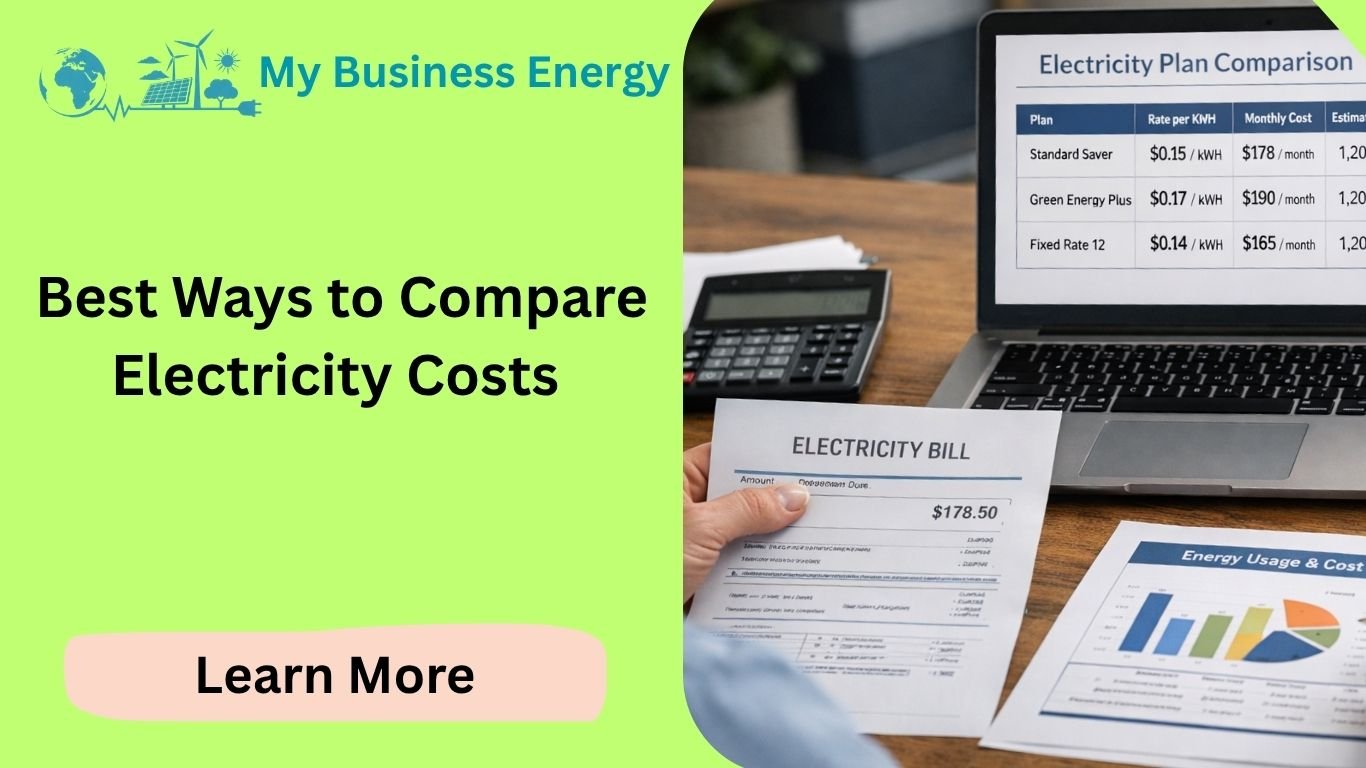
Comparing electricity unit rates is essential for managing your energy costs effectively. Understanding the cost per unit of electricity lets you identify the most cost-effective plans based on your usage. It is not just the unit rate that matters; standing charges can add up to high costs over time.
By regularly reviewing your energy plan you ensure that you are not stuck paying more than necessary. Comparing prices helps you find better deals and possibly switch suppliers to a more affordable option.
Different plans offer varied tariffs which can significantly impact your monthly bills. Knowing the differences between these tariffs gives you the power to make informed choices about your energy use.
Regularly reviewing your contract before renewal can help you avoid overpaying, and keep your energy costs under control. Ultimately comparing electricity unit rates puts you in charge of your energy expenses allowing you to make decisions that work for your budget.
How to Calculate Your Business Electricity Bill
To compare business electricity unit rates properly, you should not look at the price per kWh only. Your final electricity bill usually depends on two main charges: the unit rate and the standing charge.
The unit rate is the price you pay for each kWh of electricity your business uses. The standing charge is a daily fixed cost that may be charged for keeping your business premises connected to the electricity network.
You can use this simple formula to estimate your annual business electricity bill:
- Annual electricity cost = Annual kWh usage × Unit rate + Daily standing charge × 365
For example: if a small business uses 20,000 kWh of electricity per year, has a unit rate of 25p per kWh, and pays a standing charge of 65p per day, the estimated annual cost would be:
| Cost Item | Calculation | Estimated Cost |
| Unit rate cost | 20,000 kWh × £0.25 | £5,000 |
| Standing charge | £0.65 × 365 days | £237.25 |
| Estimated annual electricity bill | £5,000 + £237.25 | £5,237.25 |
This example shows why businesses should compare the full annual cost, not only the unit rate. A low unit rate may still become expensive if the daily standing charge is high.
The final bill may also include VAT, Climate Change Levy, network charges, metering costs, and supplier costs, so businesses should check the total estimated cost before choosing a tariff.
Pros and Cons of Lower Business Electricity Unit Rates
Pros:
- Lower electricity costs: A lower unit rate reduces the cost per kWh of electricity you consume leading to significant savings especially for high-energy users.
- Better for high-usage : If your business uses a lot of electricity, a lower unit rate can result in a noticeable reduction in monthly bills.
More predictable billing: With a stable lower unit rate your energy costs may become more consistent enabling better budget management.
Cons:
- Higher standing charges: Some plans with lower unit rates may offset the savings with higher standing charges which can increase the overall cost if you use less electricity.
- Limited benefits with low usage: If your electricity consumption is low the savings from a lower unit rate may not outweigh the increased standing charges.
- Potential contract restrictions: Some low-unit-rate plans may include fixed contracts or terms that limit flexibility or include exit fees if you decide to switch suppliers early.
Conclusion
Comparing business electricity unit rates is an important step for reducing business energy costs. However, the unit rate should not be checked alone. Businesses should also compare standing charges, contract length, tariff type, exit fees, and total estimated annual cost.
Because business electricity contracts are different from domestic tariffs, companies should compare quotes based on their own postcode, meter type, and annual electricity usage. This helps businesses choose a tariff that suits their actual energy needs and avoids paying more than necessary.
For more detailed guides and the latest updates, explore our Energy Guide.


