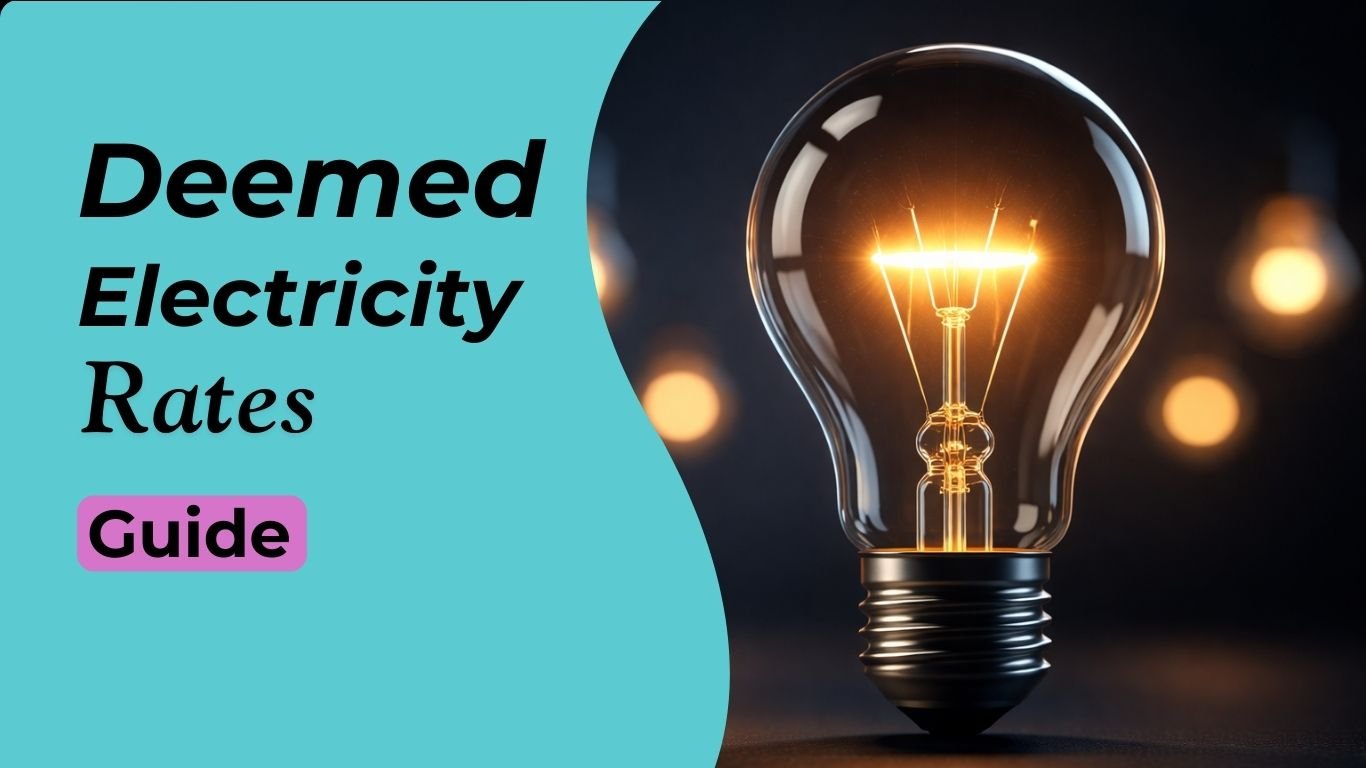
Deemed Electricity Rates UK: What They Are & How to Avoid
Deemed Electricity Rates UK are higher energy charges applied when a business or household uses electricity without a formal contract with a supplier. Many businesses are automatically placed on deemed tariffs after moving into a new property or failing to renew an energy agreement.
Because deemed electricity rates are usually more expensive than fixed tariffs, they can significantly increase energy bills. Understanding how these rates work can help businesses avoid unnecessary costs and switch to a better energy deal.
Table of Contents
What Are Deemed Electricity Rate?
Deemed Electricity Rates are the default prices you pay when you are using electricity without signing a contract with the supplier.
They usually happen when:
- You move into a new property (business premises or sometimes a new tenancy) and have not agreed a tariff yet.
- Your previous contract ends and you do not renew or agree to a new deal.
You are still supplied with electricity but the supplier places you on a deemed contract/tariff which is often more expensive because it is not negotiated and the supplier can not predict your usage. It normally continues on a rolling basis until you sign a new contract or switch.
Why Deemed Electricity Pricing Are More Expensive
Deemed electricity rates tend to be higher than regular tariffs for several reasons
- No Contract = No Negotiation: Without a signed contract suppliers cannot predict usage which makes it riskier for them. To offset this they charge higher rates.
- Higher Risk for Suppliers: Since deemed customers have not committed long-term suppliers charge more to cover the potential financial risks.
- Rolling Monthly Rates: Deemed rates are often applied on a monthly basis which means no price lock-in. Fixed tariffs on the other hand provide more stability at a lower price.
These factors make deemed rates a temporary solution that can lead to higher costs for businesses and households if left unstopped.
How Are Deemed Rates Calculated?
Deemed Billing Rates are calculated based on several factors
- Energy Consumption: The number of electricity you use will directly impact your bill. Higher usage means Higher prices.
- Supplier Risk: Without a deal suppliers can not expect how much energy you will use so they charge more to cover ability risks.
- Unit and Standing Charges: Deemed rates include both unit charges (cost per kWh of electricity used) and standing charges (daily fees to maintain your connection). These factors combine to make deemed rates generally higher than fixed rates as suppliers seek to cover the confusion of your energy consumption.
Difference between Deemed rate and out-of-contract rate
Understanding the difference between deemed rates and out-of-contract rates is important for managing energy costs. Deemed rates apply when no contract is in place, while out-of-contract rates occur after a contract ends. Both are expensive, so switching quickly can help save money.
| Factor | Deemed Rates | Out-of-Contract Rates |
| Pricing | Usually high but regulated to some extent | Typically very high and less regulated |
| Flexibility | Can switch anytime without exit fees | Can switch, but may face notice conditions |
| Cost Level | Expensive | More expensive than deemed rates in most cases |
| Who It Applies To | New tenants or businesses that move into a property | Existing customers who didn’t renew their contract |
Common Misconceptions About Deemed Contract Electricity
There are several misconceptions about Deemed Electricity Tariffs that can lead to confusion and unfortunately higher energy costs. Let us clear up some of the most common myths.
1. Deemed rates are the same as regular tariffs
- False: Deemed rates are typically much higher than regular energy tariffs. While regular tariffs are usually negotiated between the supplier and the customer, deemed rates are applied when no contract is in place and suppliers do not have the same ability to predict usage.
As a result, deemed rates are often designed to cover the supplier’s financial risk, leading to significantly higher prices. The lack of a formal agreement means that suppliers are unable to forecast usage accurately so they charge a premium to mitigate any potential loss.
2. You can not switch suppliers if you are on deemed rates
- False: You can switch to a new energy supplier at any time even if you are currently on deemed rates. In fact staying on deemed rates is usually a bad idea and switching to a fixed contract can save you money. Many people by mistake believe that they are stuck with the supplier but in reality switching suppliers is an easy and straightforward process. It is essential to shop around and find a more cost effective tariff that suits your usage.
3. Deemed rates are fixed and will not change
- False: Deemed rates can change. They are often more volatile because suppliers adjust them based on factors like market conditions and the supplier’s internal policies. Since there is no fixed agreement the price can fluctuate leaving you vulnerable to sudden increases.
By contrast a fixed-rate contract locks in your energy price for a set period offering greater stability and protection from unexpected price hikes.
Risks of Staying on Deemed Rates
Remaining on deemed electricity rates may seem like a temporary solution but it comes with several significant risks that could cost you much more in the long run. Here are the key risks of staying at deemed rates.
1. Unpredictable and Higher Costs
Deemed rates are generally much higher than standard or fixed-rate tariffs. This is because without a signed contract the energy supplier cannot accurately predict your usage or guarantee a long-term relationship.
As a result suppliers charge higher rates to account for the uncertainty and you end up paying more for your electricity. Additionally deemed rates are often subject to Change meaning your bills can increase unexpectedly.
Unlike fixed-rate contracts which lock in a price for a set term, deemed rates leave you helpless to price hikes at any time making it harder to budget and manage your energy costs effectively.
2. Financial Consequences
Staying on deemed rates can lead to significant financial strain. For example if you are paying 50p/kWh on a deemed rate but could be paying 25p/kWh with a fixed contract the difference can result in hundreds or even thousands of pounds in extra energy charges each year.
Over time these additional charges add up especially for businesses that use large amounts of electricity. In some cases businesses and households that remain on deemed tariffs year after year end up spending far more than they would if they took the time to compare energy deals and switch to a more competitive rate.
3. Missed Savings Opportunities
One of the most significant risks of staying on deemed rates is the missed opportunity to save. Energy suppliers often offer lower rates discounts and fixed-price contracts to attract new customers. These rates are often much more affordable than deemed rates allowing you to lock in an expected monthly cost and avoid the uncertainty of price fluctuations.
By failing to shop around or renew your energy contract you are missing out on potential savings. Whether you are running a business or managing your household bills, staying at deemed rates means you are paying more than necessary and missing out on better offers and deals that could significantly lower your energy costs.
How to Avoid or Move Off deemed energy rates UK
To avoid high costs it is essential to understand how to move off deemed energy rates and switch to a more suitable tariff in the UK.
- Check Your Current Energy Bill
Review your energy bill to confirm if you are at a deemed rate. Look for terms like Deemed or Default tariff to identify the higher rates. If you find that you are being charged more than expected, take action right away to prevent overpaying. - Compare Energy Tariffs
Use comparison websites like Uswitch Compare the Market or Energy helpline to find the best deals. These sites help you compare fixed and variable tariffs and show you the most challenging prices from multiple suppliers. Switching to a fixed rate contract often leads to more predictable lower bills. - Switch to a New Supplier
Once you have found a better deal, switch to a new supplier. The switching process is usually free and takes around 3 to 4 weeks during which time your energy supply will not be interrupted. This simple step can save you significant money and prevent you from being stuck on expensive deemed rates.
Real-Life Examples of Deemed Rate Savings
Switching off deemed electricity tariff can lead to significant savings. Let’s explore a few real life examples of how businesses and households have benefited from moving to fixed or standard tariffs.
Example 1: Small Business Savings
A small business in Birmingham was placed on a deemed rate of 50p/kWh after moving into a new office. The business owner was unaware of the high rates until they noticed an unusually high monthly bill of around £900.
After reviewing their options the owner used an energy comparison site to switch to a fixed-rate contract at 28p/kWh. The new rate lowered their monthly bill to approximately £550 saving them around £350 per month.
- Deemed rate: 50p/kWh
- Fixed-rate contract: 28p/kWh
- Monthly savings: £350
- Annual savings: £4,200
This example demonstrates that businesses can greatly reduce their energy costs simply by moving off deemed rates and choosing for a fixed contract.
Example 2: Household Savings
A family in Manchester was living in a rented home and By mistake remained on a deemed rate of 48p/kWh for several months. Their energy bills were higher than expected, adding up £120 per month.
After reviewing their energy bills and comparing rates they switched to a standard rate contract at 26p/kWh. Their monthly bill dropped to about £85 saving them approximately £35 each month.
- Deemed rate: 48p/kWh
- Standard rate contract: 26p/kWh
- Monthly savings: £35
- Annual savings: £420
This example shows how households can save money by moving off higher deemed rates and Locking a more affordable tariff.
Conclusion
Understanding Deemed Electricity Rates is crucial for both businesses and households aiming to reduce energy costs. Deemed rates are often significantly higher than standard tariffs, making them an expensive option if left unchecked.
By learning how these rates work, identifying the risks, and taking quick action to switch to a fixed contract, you can avoid unnecessary expenses. Whether you are a small business or a homeowner, moving off deemed rates at the right time can lead to long-term savings and better control over your energy bills.
For more detailed guides and the latest updates, explore our Energy Guide.
FAQs
Get quick answers to your questions about Deemed electricity rates and how to make the best choice for your plan.
Q1: Can I switch energy providers if I am at a deemed rate?
Yes, businesses and households on deemed electricity rates can usually switch suppliers at any time without paying exit fees. Switching to a fixed energy contract can help reduce electricity costs and provide more stable pricing.
Q2: How do I know if I am at a deemed rate?
You may be on a deemed electricity rate if you recently moved into a property or your previous energy contract ended without renewal. Check your electricity bill for terms like “deemed tariff,” “deemed contract,” or “default rates.”
Q3: Can businesses negotiate deemed electricity rates?
Businesses usually cannot negotiate deemed rates directly. The best option is to compare suppliers and switch to a fixed business electricity contract for lower rates and better pricing stability.
Q4: Do deemed contracts have exit fees?
In most cases, deemed contracts do not include exit fees, which means you can switch suppliers or move to a fixed tariff whenever you find a better deal.
Q5: Are deemed rates more expensive than fixed tariffs?
Yes, deemed electricity rates are usually more expensive than fixed tariffs because suppliers cannot accurately predict your energy usage without a signed contract. Fixed tariffs often provide lower and more stable pricing.