Prepayment Meters: How They Work, Benefits, Costs and Drawbacks
Electricity and gas bills can be stressful, especially when a large, unexpected charge lands in your inbox at the end of the month. For millions of households, prepayment meters offer an alternative: pay for your energy before you use it, and never get hit with a surprise bill again.
But Top-up Meters aren’t for everyone. They come with real advantages, a few notable drawbacks, and a set of features that make them more suited to some households than others. This guide breaks down everything you need to know ,how they work, what types exist, how they compare to standard meters, and how to decide if one is right for your home.
Table of Contents
What is a Prepayment Meter?
A prepayment meter is a type of electricity meter that requires you to pay for electricity in advance, before you use it. Instead of receiving a monthly or quarterly bill after consuming energy, you load credit onto your meter and draw from that balance as you use power.
Once your credit runs out, your energy supply stops unless your meter has an emergency credit feature (more on that shortly). Advance Payment Meters are common in rental properties and among households that prefer to keep tight control over their energy spending.
How Does a Prepayment Meter Work?
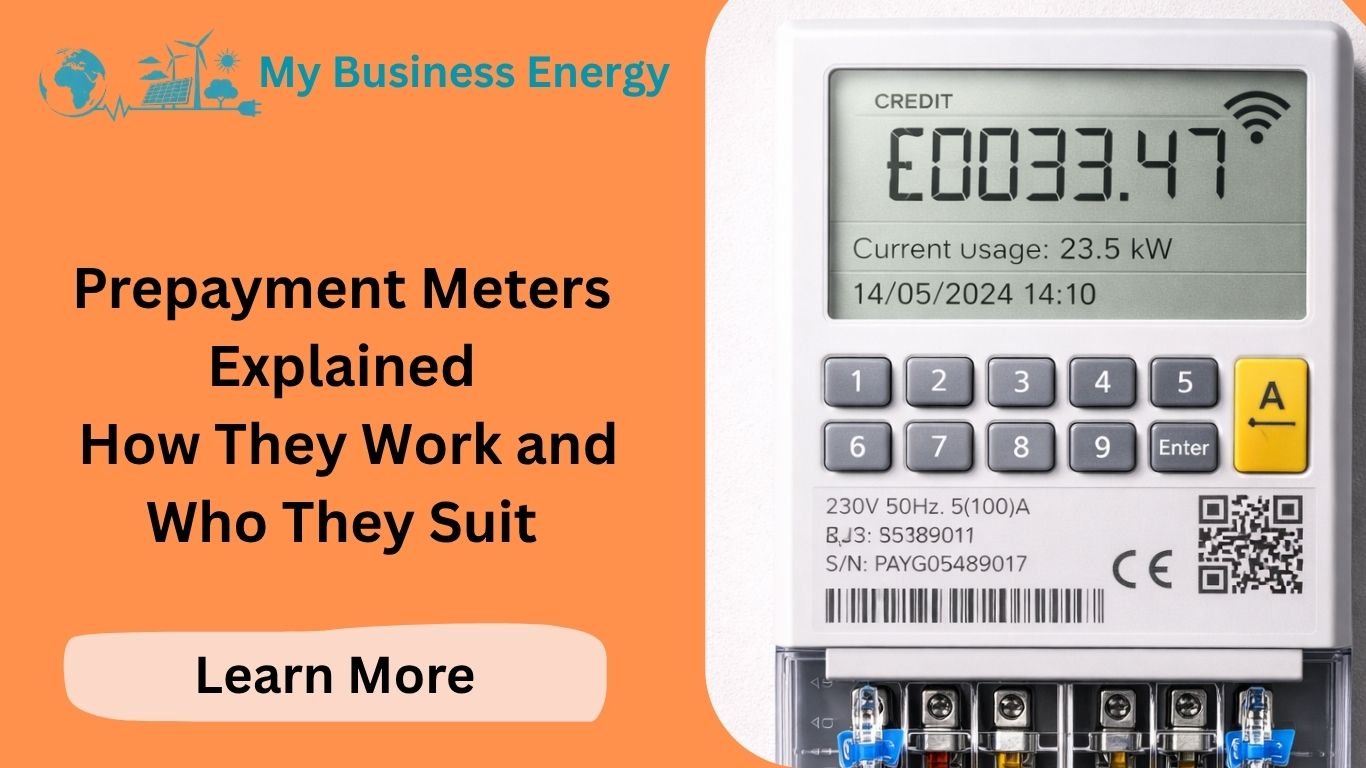
The mechanics are straightforward. You purchase credit at a local pay point, post office, or through an app or online portal, depending on your supplier. That credit is loaded onto your meter either via a physical key, a smart card, or—in the case of smart Prepaid Power Meters, automatically through a digital top-up.
As you use energy throughout the day, the meter reduces credit from your balance in real time. Most meters show your remaining balance on a small screen so that you always know your status. When your balance reaches a fixed level, the meter usually gives you a warning that it is time to recharge.
If your balance hits zero, your supply cuts off. Many meters, however, include a small amount of emergency credit—usually between £5 and £10—that activates automatically to keep your energy running until you can top up again.
Benefits of Prepayment Meters
- Better budget Control
Since you make payment in advance, it becomes a lot simpler to keep track of your electricity expenses on a weekly or monthly basis. You do not have to deal with big bills at the end of the quarter, only regular and controllable top-ups. - No debt Accumulation
With a Prepaid Power Meter, you simply cannot run up an energy debt in the traditional sense. For households that have struggled with bills in the past, this can be a significant relief. - No need for a credit Check
Certain energy providers may insist on a credit check as a requirement for opening a regular account. Advance Payment Meter
s are typically offered without credit checks; hence, they are a practical choice for individuals who have little or no credit history. - Easier for landlords to Manage
Landlords often install prepayment meters in rental properties so tenants are responsible for topping up their energy-keeping bills separate from the rental agreement.
Drawbacks of Prepayment Meters
- Higher unit Rates
This is one of the biggest downsides. In many cases, Prepaid Power Meter tariffs carry higher unit rates than equivalent credit meter tariffs. Over the course of a year, this can add up to a meaningful difference in your annual energy costs. - Inconvenience of topping Up
Depending on your meter type, topping up can require a trip to a physical paypoint. If you forget or run out of credit at an inconvenient time, you could lose supply temporarily. - Limited tariff Choice
Many customers who use prepayment meters have at most a limited range of tariff options compared to credit meter users. This therefore limits their ability to get a better deal through switching. - Not ideal for high-consumption household
High-energy-using households might find frequent top-ups a bother. Operating a prepayment facility in a home that has a high level of utilisation needs more intensive supervision.
Types of Advance Payment Meters
Prepayment meters do not all operate the same. The main types are the following:
- Key meters (electricity): you simply buy your credit at a paypoint, and it’s loaded onto your physical key. Then you insert the key into the meter to transfer the credit.
- Card meters (gas): It is very similar to key meters, but the credit is loaded on a card, not a key. To update your balance, you just have to insert the card into the meter.
- Smart Prepaid Power Meters: The most modern option. Smart meters track usage in real time and allow you to top up remotely via an app or online account—no keys or cards required. Many energy suppliers are now rolling out smart prepayment meters as part of the national smart meter rollout.
- Smart Prepaid Power Meters also send usage data directly to your supplier, eliminating estimated bills and giving you a clearer picture of your consumption habits.
Who Should Use a Top-up Meter?
Prepayment meters work well for specific types of users:
- Renters and tenants who want to manage their own energy without a supplier contract in their name
- People on tight budgets who prefer to spend a fixed amount on energy each week
- Those with a history of energy debt who want to avoid accumulating arrears
- Landlords who want tenants to handle their own utilities independently
- Short-term or temporary occupants, such as people staying in a property for a few months
They’re less suited to large families with high energy demands, households looking for the cheapest possible tariff, or people who find frequent top-ups inconvenient.
What about businesses?
Prepayment meters are less common in commercial settings, but they do exist. Small businesses—particularly those in short-term leased spaces—occasionally use them. For most businesses, however, a standard business energy account offers more flexibility and better rates.
Prepayment Meter vs Standard Meter
Feature | Prepayment Meter | Standard Meter |
Payment timing | Pay before use | Pay after use |
Bill surprises | Unlikely | Possible |
Unit rates | Typically higher | Typically lower |
Tariff options | Fewer choices | More choices |
The key trade-off is control versus cost. Prepaid Power Meters give you more visibility and control over your spending but often come at a higher price per unit of energy.
Can You Switch from a Prepayment Meter?
Yes, in most cases switching your meter from a Prepaid Power Meter to a standard credit meter is possible.
Generally, this process involves the following:
- Getting in touch with your existing energy supply company to request a meter change is the right step forward.
- Many times, scheduling an engineer to visit your home and replace a meter will entail a charge; however, this is totally up to the choice of your supplier.
- Passing a credit check, as most standard accounts require one
If you use a smart prepayment meter, changing the supplier might be a lot easier for you. Certain smart meters can be switched from prepaid to credit mode (and vice versa) remotely, without the need for an engineer’s physical visit. Before switching, be sure to do a tariff comparison. If the cost difference between a cheaper credit meter tariff is greater than the switching fees, then it would be very beneficial to go ahead with the change.
Tips for Managing Energy Costs with a Prepaid Power Meter
Getting the most out of a advance Payment Meter only takes a little bit of preparing.
These habits can help you keep costs down:
- Top up regularly in small amounts to avoid running low at inconvenient times.
- Check your usage through your meter’s display or a smart meter app to identify your consumption patterns.
- If your tariff includes lower rates at certain hours, use energy during off-peak times.
- Switch to a smart prepayment meter if you have not already; it makes top-ups and tracking much easier.
- Compare tariffs periodically, even as a prepayment customer, as rates can change.
- Make use of emergency credit sparingly; it is a safety net, not a regular resource.
Final Thoughts on Prepayment Meters
Prepayment meters serve a real purpose. For people who want to stay on top of their energy spending,without the anxiety of a large bill arriving at month’s end,they offer genuine peace of mind. They’re also a practical solution for landlords and tenants navigating shared utility responsibilities.
However, they are not exactly suitable for every household. The increased unit prices and scarcity of tariff plans lead to these units becoming more costly over time, especially for households that require a lot of energy.
The best approach is to assess your situation honestly. If keeping your budget in check is your main problem and what comes with it does not bother you that much, then getting a advance Payment Meter may be a viable option. On the other hand, if the main focus is on the cost per unit, then you might want to consider standard meter tariffs because they could save you more money over time.
If you want to learn more about Business Energy Guide please visit our website.
FAQs
Here is a quick overview to help you get a better understanding of the costs, meter changes, emergency credit, and the budgeting benefits of prepayment meters.
Q1: Are Advance Payment Meters more expensive?
Often, yes. Prepayment meter tariffs usually have a higher cost per unit of energy than typical credit meter tariffs. However, the discrepancy has become less pronounced lately, especially with the installation of smart Advance Payment Meters. In fact, it is a good idea to check your present rate versus the other options to find out the amount of your potential savings if you decide to switch.
Q2: Can I change my prepayment meter to a normal meter?
Yes. You can request a meter change through your energy supplier. Depending on your supplier and meter type, this may involve an engineer visit and a credit check. Some smart meters can be switched between prepayment and credit mode without a visit.
Q3: What happens if I do not top up my meter?
If your balance reaches zero and you haven’t topped up, your energy supply will cut off. Most meters first activate emergency credit, giving you a small amount of energy (typically worth £5–£10) to keep you going until you can top up. Once you repay the emergency credit on your next top-up, normal service resumes.
Q4: Do Top-up Meters have emergency credit?
Most Top-up Meters have emergency credit as a feature. It switches on automatically when the user balance is depleted and it gives some time in case the supply is cut at an unexpected moment. The sum varies from one supplier to another, but generally it is from £5 to £10.
Q5: Are prepayment meters good for budgeting?
They can be. Because you pay for energy in advance, you know exactly how much you’re spending and when. This makes it easier to manage your energy costs on a weekly or monthly basis without the risk of a large, unexpected bill. For households on a fixed income or tight budget, this predictability is a genuine advantage.