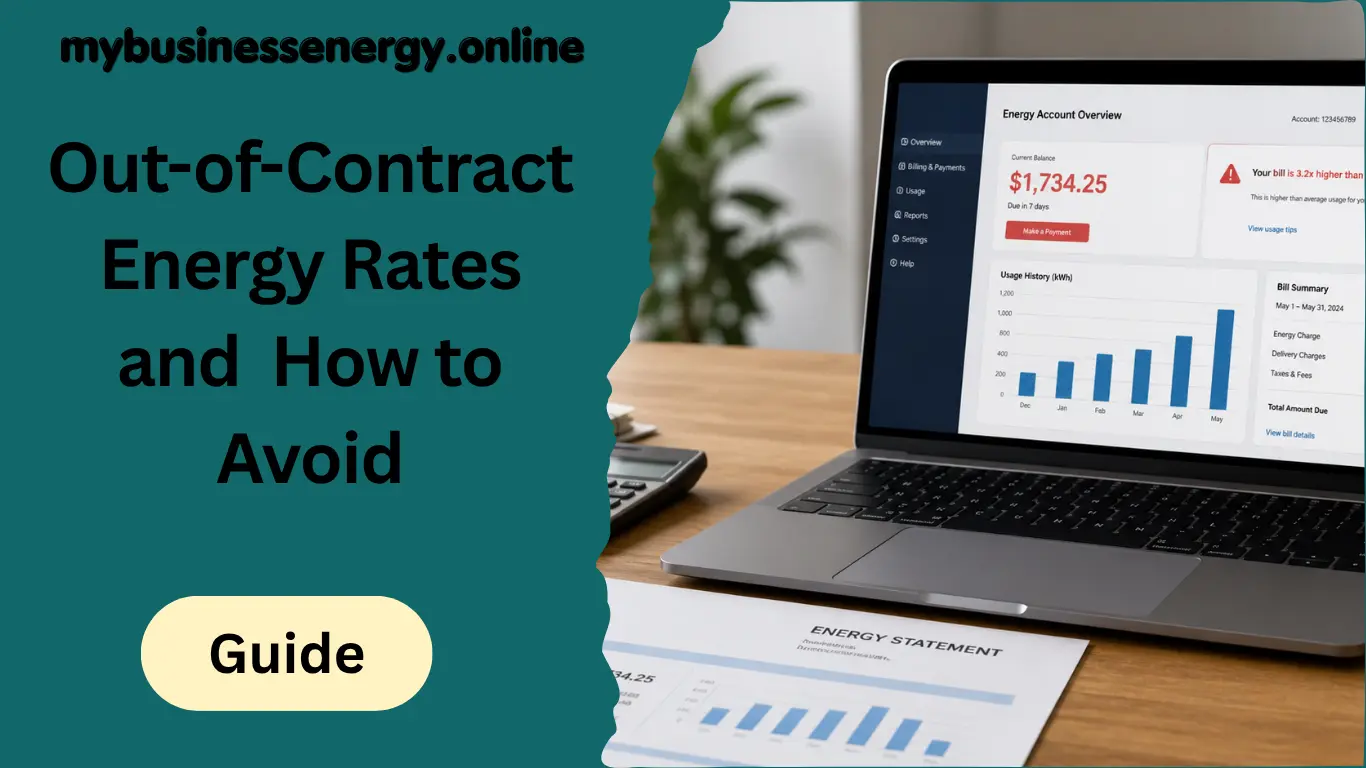
Out-of-Contract Energy Rates UK: What They Are & How to Avoid
If your energy contract has ended without renewal, you could be paying higher out-of-contract rates. These rates are typically more expensive and can impact your monthly bills. In this guide, we’ll explain what out-of-contract rates are, how they work, and how you can avoid paying more. Whether you’re a household or a business, knowing how to manage these rates can help you save money.
Table of Contents
What is an Out-of-Contract Rate in the UK?
An out-of-contract rate in the UK refers to the higher energy rates that you are charged once your fixed-term energy contract ends, and you don’t renew or sign a new deal with your supplier. When this happens, your supplier will automatically place you on their default tariff, which is typically much higher than the rate you had during your contract.
These rates are designed for customers who don’t actively manage their energy contracts, and they are generally more expensive than the rates offered under a fixed contract. Being on an out-of-contract rate means that you’re no longer benefiting from any previous discounts or special deals, which can result in significant increases in your energy bills.
How Do Out-of-Contract Rates Work in the UK?
In the UK, when an energy contract ends and no new deal is agreed, customers are automatically switched to out-of-contract rates by their energy supplier. These rates are typically much higher than the standard fixed or variable tariffs customers might have had before, and they apply until a new agreement is made.
Here’s how it works:
- Contract Expiry: Once your fixed-term contract expires, you enter a period where you’re no longer bound by that contract. If you haven’t signed a new deal, your supplier will switch you to their default out-of-contract rate.
- Higher Costs: Out-of-contract rates are usually more expensive because they don’t offer the same discounts or fixed pricing. Suppliers have no incentive to keep you on a cheaper rate since you’re not tied to a contract.
- Automatic Switching: If you don’t actively renew or change your tariff, this switch happens automatically, and you’ll start seeing higher charges on your bills.
- No Long-Term Commitment: While you’re on out-of-contract rates, you’re not tied to a long-term commitment, meaning you can switch to a better deal anytime. However, it’s often better to act quickly because the longer you stay on these rates, the more you’ll end up paying.
To avoid the higher charges associated with out-of-contract rates, it’s important to keep track of your contract expiry date and either renew your deal or shop for a better rate before the contract ends.
Out-of-Contract Rates vs. Deemed Rates: What’s the Difference?
Here’s a comparison table for Out-of-Contract Rates vs. Deemed Rates:
Aspect | Out-of-Contract Rates | Deemed Rates |
Rate Type | Typically higher than previous contract rates, standard variable tariff | Usually higher than standard contract rates, but can be temporary |
Billing | Higher rates than fixed or variable rates | Higher rates, but often used temporarily until a contract is signed |
Supplier’s Role | Places customer on default higher rate | Sets the deemed rate until a contract is agreed |
| Financial Impact | Can result in significant increases in energy bills | Typically higher bills, but for a limited time only |
How Do Out-of-Contract Rates Affect Your Bills?
When your energy contract expires and you don’t renew it or sign a new agreement, your energy supplier will automatically switch you to out-of-contract rates. These rates are usually much higher than the fixed or variable rates you had while under contract. Here’s how they can affect your bills:
Increased Energy Costs
Out-of-contract rates are often significantly higher than the fixed rates offered under a standard contract. This means that once your contract ends, you’ll likely start paying more for the same energy usage, which can lead to higher monthly bills. For example, the average out-of-contract rate could be up to 30% higher than your previous rate.
No Discounts or Fixed Benefits
Unlike a fixed-term contract, where you might benefit from discounts or promotions, out-of-contract rates usually don’t offer such perks. You will be billed at the supplier’s standard rate, which doesn’t include any loyalty discounts or special deals.
Unpredictable Bills
With out-of-contract rates, there’s no guarantee that your energy pricing will remain consistent. Variable rates mean your energy prices could fluctuate depending on the market or the supplier’s pricing changes. This makes it difficult to predict your monthly bill, and you may experience unexpected price hikes.
Higher Rates for Longer Periods
If you stay on out-of-contract rates for an extended period, you might notice ongoing increases in your energy bills. Suppliers may review their standard rates frequently, meaning that your energy prices could keep rising each time the rates are adjusted. Staying out of contract could end up being a costly long-term decision.
Impact on Budgeting
Higher energy bills due to out-of-contract rates can make it harder to stick to a budget, especially for households or businesses that rely on consistent monthly expenses. This unpredictability can strain finances, leading to unexpected costs that you may not have accounted for.
Out-of-Contract Rates for Businesses vs Residential Customers
Out-of-contract rates can affect both businesses and residential customers, but the impact varies significantly.
Residential Customers
- Higher Bills: Once the contract ends, customers are moved to a higher standard rate.
- Easier Switching: Residential customers can easily switch to a new deal before the rates go up.
- Shorter Duration: They usually have enough time to renew or change suppliers, avoiding high costs.
Business Customers
- Substantial Rate Increases: Businesses face much higher rates, which can strain budgets.
- More Complex Contracts: Due to specific energy needs, businesses may have more difficulty switching suppliers quickly.
- Less Protection: Businesses have fewer regulatory protections, leaving them more exposed to rate hikes.
Factor | Residential | Business |
Rate Increase | Higher but manageable | Significantly higher, leading to bigger bills |
Switching Ease | Easy, with comparison tools | More complex, with bespoke contracts |
Duration of Impact | Can switch quickly | May stay on higher rates longer |
How to Identify Out-of-Contract Rates on Your Bill
Identifying out-of-contract rates on your energy bill is simple once you know what to look for. Here’s how you can spot them:
Look for Terms Like “Out-of-Contract” or “Default Rate”:
Energy suppliers will often clearly label your billing terms when you’re on out-of-contract rates. Look for phrases like “out-of-contract”, “default tariff”, “standard rate”, or “variable tariff”. These terms indicate that you’ve been moved to a higher rate after your contract expired.
Check the Rate You’re Being Charged:
Compare the rates listed on your bill to the rates you were paying under your previous contract. If the rates are higher, especially if they don’t match any of the previously agreed-upon tariffs, you may be on an out-of-contract rate.
Review Your Energy Supplier’s Terms and Conditions:
Most energy suppliers are required to include information on out-of-contract rates in their terms and conditions. You can review these documents to verify whether the rates listed on your bill are indeed out-of-contract rates.
Compare Your Usage and Charges:
Another clue to identify out-of-contract rates is by checking the usage vs. charges. If you’re using the same amount of energy, but your bill has increased significantly, it could be because you’ve been switched to a higher rate.
Look for a “Deemed” or “Non-Contract” Label:
If you’ve recently moved into a property, your bill might show “deemed rates” or mention that the supply is non-contractual, which means you’re paying out-of-contract rates until you sign a formal agreement.
When Do You End Up on Out-of-Contract Rates?
You end up on out-of-contract rates when your energy contract expires, and you don’t renew or sign a new deal with your supplier. This can happen in several scenarios:
Contract Expiry:
The most common reason for being switched to out-of-contract rates is when your fixed-term energy contract ends. If you don’t arrange a new deal before the expiration, your supplier will place you on their default out-of-contract rate, which is usually higher.
Failure to Renew:
If you forget to renew your contract or miss the renewal deadline, your supplier may move you to out-of-contract rates without your consent. This can happen even if you’ve been a long-time customer.
No New Agreement:
After your contract ends, if you don’t actively negotiate or accept a new tariff or plan, you’ll automatically be switched to the out-of-contract rate, which may not offer the same benefits or pricing as your previous contract.
Early Termination of Contract:
If you decide to cancel or end your contract early, you may be switched to out-of-contract rates, depending on the supplier’s terms. Some suppliers may also impose early exit fees in such cases.
Change in Supplier:
If you change suppliers but the new contract isn’t set up in time, you could briefly end up on out-of-contract rates while the switch is processed.
Why It’s Important to Avoid Out-of-Contract Rates
Out-of-contract rates can significantly increase your energy bills. These rates are generally much higher than the fixed-term tariffs you were paying, and suppliers typically don’t offer discounts or loyalty incentives on them. To avoid paying more, it’s crucial to renew or switch your energy contract before your current one expires.
By actively managing your contract renewal or switching in advance, you can avoid falling into out-of-contract rates and save money on your energy bills.
Conclusion
Out-of-contract rates can lead to higher energy bills, as they are typically much more expensive than fixed-term contract rates. To avoid these extra charges, make sure to renew your contract or switch suppliers before your current deal expires. By staying proactive and managing your contract, you can save money and ensure you’re always on the best possible rate.
For more detailed guides and the latest updates, explore our Energy Guide.
FAQs
Here are some common questions about out-of-contract rates that can help you better understand how they work and how to avoid them
Q1 How can I tell if I’m on out-of-contract rates?
Check your bill for terms like “out-of-contract”, “default rate”, or “variable tariff”. These terms indicate you’ve been switched to a higher rate after your contract expired.
Q2 Can I switch suppliers if I’m on out-of-contract rates?
Yes, you can switch suppliers at any time, even if you’re on out-of-contract rates. It’s a good way to avoid paying higher charges.
Q3 Do out-of-contract rates apply to both residential and business customers?
Yes, both residential and business customers can end up on out-of-contract rates. However, businesses generally face much higher charges than residential customers.
Q4 Can I avoid being automatically moved to out-of-contract rates?
Yes, by keeping track of your contract’s end date and renewing or switching before it expires, you can avoid being automatically moved to higher out-of-contract rates.
Q5 Can out-of-contract rates change during the year?
Yes, suppliers can change their out-of-contract rates at any time, often in response to market conditions. This means your rates may rise unexpectedly.