Variable Rate Tariffs UK: Complete Guide, Pros, Cons & Tips
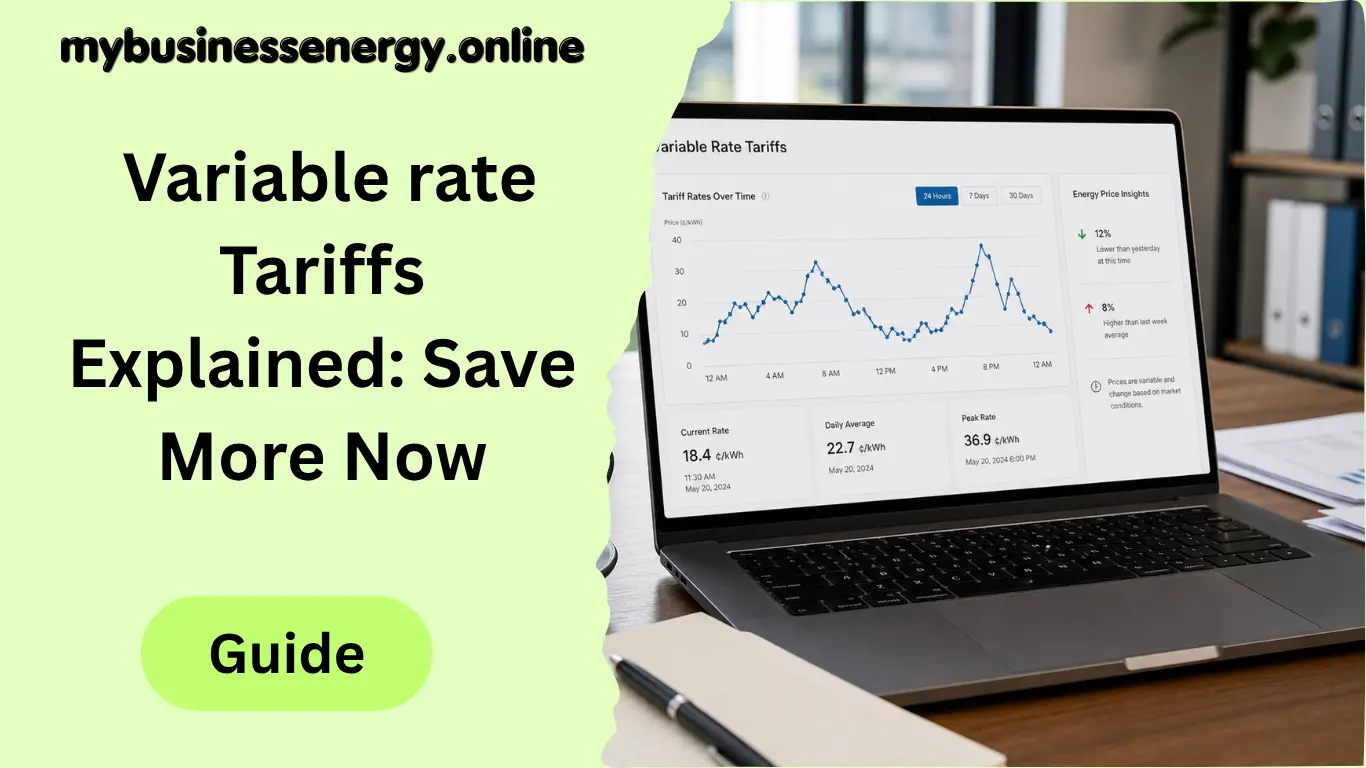
A variable-rate tariff is an energy plan where your electricity tariff and gas tariff unit rates can increase or decrease based on wholesale energy prices. In the UK, many standard variable tariffs (SVTs) are influenced by the Ofgem energy price cap, which affects both unit rates and standing charges.
This guide explains how variable-rate tariffs work, their pros and cons, how they compare with fixed tariffs, and whether they’re the right choice for your home or business.
Table of Contents
What Is a Variable-Rate Tariff?
A variable-rate tariff is an energy plan where your gas and electricity unit rates can increase or decrease based on wholesale energy prices and supplier pricing. In the UK, many standard variable tariffs are influenced by the Ofgem energy price cap, making monthly energy bills less predictable than fixed-rate tariffs.
How Does a Variable-Rate Tariff Work?
Your energy supplier reviews changes in wholesale energy prices and may adjust your unit rate accordingly. If market prices increase, your electricity and gas costs may rise. If prices fall, your supplier may reduce your rates.
Here’s how it works in simple terms:
- Market Influence: The cost of electricity or gas is determined by factors like supply and demand, global energy trends, weather conditions, and changes in energy production costs.
- Price Adjustments: Your energy supplier can increase or decrease the price you pay per unit of energy (kWh) in response to changes in the market. For instance, if the cost of wholesale energy rises due to higher demand or reduced supply, your energy bill might go up. Conversely, if prices fall, you may benefit from lower costs.
- Frequency of Changes: The price for variable-rate tariffs can change frequently, sometimes monthly or quarterly, depending on the supplier’s policies. In the UK, the energy regulator, Ofgem, also plays a role in controlling how often and by how much these prices can change, especially during periods of high price volatility.
The primary advantage of variable-rate tariffs is that they give you the potential to save money when energy prices are low. However, they also come with the risk of higher costs if prices surge, making it essential for consumers to track their energy usage and market trends.
How Does the Ofgem Energy Price Cap Affect Variable Tariffs?
The Ofgem energy price cap limits the maximum unit rates and standing charges that suppliers can charge customers on standard variable tariffs (SVTs). It does not cap your total energy bill, as the amount you pay still depends on how much gas and electricity you use. The price cap is reviewed and updated every three months to reflect changes in wholesale energy costs and other factors.
What Is the Ofgem Energy Price Cap?
The energy price cap is a limit set by Ofgem on the maximum unit rate (price per kWh) and daily standing charge for households on standard variable and default energy tariffs. Suppliers can charge less than the cap, but they cannot charge more.
Who Does the Price Cap Apply To?
The price cap mainly protects households on standard variable tariffs (SVTs) and default tariffs. It does not usually apply to fixed-rate tariffs or business energy contracts.
How Often Does the Price Cap Change?
Ofgem reviews and updates the energy price cap every three months based on wholesale energy prices, network costs, operating costs, and other market factors.
What Is a Standing Charge?
A standing charge is a fixed daily fee you pay to stay connected to the gas and electricity network, even if you do not use any energy. It covers the cost of maintaining the energy infrastructure, meter services, and supplier operating costs.
Example
Imagine your supplier charges 26p per kWh for electricity and a 57p daily standing charge. If Ofgem lowers the price cap in the next review, your supplier may reduce these charges if you are on a standard variable tariff. However, your final bill will still depend on how much energy you use each month.
What Is the Difference Between a Variable and Fixed Tariff?
The main difference is that a fixed tariff locks your energy rates for a set period, while a variable-rate tariff allows prices to change with market conditions. Fixed tariffs offer price certainty, whereas variable tariffs provide flexibility but come with the risk of changing bills.
Aspect | Variable‑Rate Tariff | Fixed‑Rate Tariff |
| Price Stability | Prices fluctuate with the energy market. They can rise or fall depending on market conditions. | Prices remain the same for a set period (usually 12–24 months). |
Contract Length | No long-term commitment; typically, it’s a rolling contract that can be changed easily. | Typically comes with a 12–24 month contract commitment. |
Best For | Those willing to take on some risk for potential savings, especially if market prices are low. | Those who prefer price stability and predictability in their bills. |
Ideal for | Consumers who are comfortable with uncertainty or who can track energy market trends. | Consumers who prioritize predictability and stability in their energy costs. |
What Types of Variable-Rate Tariffs Are Available in the UK?
UK energy suppliers offer several types of variable-rate tariffs, including Standard Variable Tariffs (SVTs), flexible tariffs, time-of-use tariffs, market-based tariffs, and green variable tariffs. Each option differs in how prices are calculated and when energy rates can change.
1. What Is a Standard Variable Tariff (SVT)?
Description: A Standard Variable Tariff (SVT) is the default tariff offered by an energy supplier. Its unit rates are usually limited by the Ofgem energy price cap. Under this plan, the price you pay for energy is linked to the current market rate, meaning it can fluctuate over time.
How It Works: The price per unit of electricity or gas changes based on market conditions, which can increase or decrease. Energy suppliers review their pricing regularly, and the consumer’s bill adjusts accordingly.
Best For: Consumers who do not want to commit to a long-term contract and are comfortable with potential price changes.
2. What Is a Flexible Energy Tariff?
Description: Flexible tariffs offer a level of flexibility in pricing based on market conditions, but they often come with more options and terms than standard variable tariffs.
How It Works: The price can change frequently, sometimes even more often than with standard variable tariffs, but customers may have more control over their usage patterns to help manage costs (such as peak-time discounts).
Best For: People who are willing to monitor energy consumption and adjust usage based on the market prices to benefit from lower rates.
3. What Is a Time-of-Use Tariff?
Description: Time-of-use tariffs offer different rates depending on the time of day when energy is used. The price is typically lower during off-peak hours and higher during peak periods.
How It Works: Energy costs are broken down into peak and off-peak periods. You may find that your rates vary depending on whether you use electricity during the day, night, or weekends.
Best For: Consumers who can shift their energy usage to off-peak hours (e.g., running washing machines or charging electric vehicles at night) to take advantage of lower prices.
4. What Is a Market-Based Tariff?
Description: These tariffs are directly linked to the wholesale cost of energy. The price you pay is influenced by market conditions, and the tariff fluctuates accordingly, reflecting the actual cost of energy production.
How It Works: The price is adjusted based on the energy market, including factors like weather, supply, demand, and global energy prices. This can result in significant price shifts over time.
Best For: Consumers who want to directly benefit from falling market prices and are comfortable with the risk of prices rising.
5. What Is a Green Variable Tariff?
Description: Green variable tariffs are an eco-friendly option that allows consumers to pay for electricity generated from renewable sources, such as wind or solar.
How It Works: While the pricing can still fluctuate like other variable tariffs, the key difference is that the energy supplied is certified as coming from renewable sources, often linked to an energy provider’s sustainability practices.
Best For: Consumers who want to reduce their carbon footprint while still benefiting from the flexibility of variable rates.
What Are the Advantages of a Variable-Rate Tariff?
Variable-rate tariffs can help consumers save money when energy prices fall, offer greater flexibility with fewer long-term commitments, and allow switching suppliers more easily than many fixed-rate contracts. However, savings depend on market conditions.
Potential for Savings
Variable‑rate tariffs offer the chance to save money when energy prices are low. If the market price of energy decreases, you’ll pay less for your energy usage, making it an attractive option when market conditions are favorable.
Flexibility
These tariffs typically come with no long-term commitment, giving consumers the freedom to switch suppliers or tariffs without penalties. This flexibility is ideal for those who want to adjust their energy plan as their needs change.
Adaptability to Market Conditions
As energy prices fluctuate, variable-rate tariffs allow consumers to benefit from lower prices when demand is low or when renewable energy generation is high, such as during sunny or windy days. This makes it easier to take advantage of favorable conditions.
What Are the Disadvantages of a Variable-Rate Tariff?
The biggest disadvantage of a variable-rate tariff is that energy prices can rise without notice, making monthly bills harder to predict. This uncertainty can make budgeting more difficult, especially during periods of high wholesale energy prices.
Price Uncertainty
The main disadvantage of variable‑rate tariffs is that the price can fluctuate, sometimes dramatically, based on market conditions. This unpredictability can lead to higher energy bills when the market prices rise.
Difficult to Budget
Because energy costs can change from month to month, it can be hard to predict how much you’ll pay each month. This lack of stability can make budgeting for energy expenses more challenging.
Exposure to Market Volatility
Variable‑rate tariffs expose consumers to the volatility of the energy market. If there’s a sudden increase in energy prices due to factors like fuel shortages or geopolitical events, your bill could rise unexpectedly, which may be difficult to manage.
Is a Variable-Rate Tariff Right for You?
A variable-rate tariff is suitable for people who can manage changing energy costs and want the flexibility to switch tariffs. If you prefer stable monthly bills and predictable budgeting, a fixed-rate tariff may be a better choice.
- Risk Tolerance
If you’re comfortable with price fluctuations and can tolerate potential price hikes during high-demand periods, a variable-rate tariff may be a good fit. However, if you’re risk-averse and prefer predictable, stable costs, a fixed-rate tariff might be a better choice. - Energy Consumption Patterns
If your energy usage varies significantly throughout the year, you may benefit from a variable-rate tariff, especially during off-peak times when prices tend to be lower. On the other hand, if your energy usage is consistent, a fixed-rate plan could provide more cost certainty. - Flexibility Needs
A variable-rate tariff offers greater flexibility in terms of no long-term commitment, allowing you to switch suppliers easily. If you prefer the freedom to switch without being tied to a contract, this type of tariff might be more appealing.
How Can You Save Money on a Variable-Rate Tariff?
You can save money on a variable-rate tariff by reducing energy usage, using electricity during off-peak hours where available, monitoring market prices, and comparing tariffs regularly to find better deals.
- Monitor Market Trends
Keep an eye on energy market trends and pricing forecasts. If you notice a dip in energy prices, it might be a good time to use more electricity or gas, taking advantage of the lower rates. - Shift Energy Usage to Off-Peak Hours
Many variable-rate tariffs offer lower rates during off-peak hours. Adjust your energy usage, such as running appliances or charging devices, during these times to reduce your overall energy costs. - Install a Smart Meter
A smart meter helps track your energy usage in real-time, allowing you to better understand when and where you’re using the most energy. This insight can help you adjust your habits and reduce waste, ultimately saving you money on your variable-rate tariff.
How Do You Switch from a Fixed to a Variable Tariff?
To switch from a fixed-rate tariff to a variable-rate tariff, check whether your current contract includes exit fees, compare available tariffs, choose a suitable supplier, and complete the switching process. Most energy switches in the UK are straightforward and handled by the new supplier.
1. Check Your Current Fixed-Rate Tariff Terms
- Review Your Contract: Before switching, check the terms of your current fixed-rate tariff. Some contracts may have early exit fees or penalties if you switch before the agreed end date. Make sure you understand any costs involved in leaving your current plan.
- Notice Period: Fixed-rate contracts often have a notice period (usually 30–60 days), so be aware of when you can give notice and what the final billing will look like.
2. Compare Available Variable Tariffs
- Research Energy Providers: Look at different energy suppliers to compare their variable-rate tariffs. Many suppliers offer online tools or comparison websites (like Uswitch or MoneySuperMarket) where you can check different tariff plans.
- Consider Your Usage: Choose a variable tariff that matches your energy consumption patterns. Some plans might offer benefits during specific times of day (e.g., night-time rates), while others may be linked to market prices.
3. Contact Your Current Supplier
- Inform Them of Your Decision: Once you’ve decided to switch, inform your current energy supplier that you’d like to switch from a fixed-rate to a variable-rate tariff. This can often be done through your online account, over the phone, or via email.
- Understand the Transition Process: Ask about the transition process, including how your final bill will be calculated and when the new tariff will take effect.
4. Consider Switching Suppliers
- Look Beyond Your Current Supplier: You may find better deals or plans by switching to a new energy provider. Most suppliers in the UK allow you to switch easily, even if you’re still on a fixed-rate contract.
- Check for Special Offers: Some suppliers offer special promotions or discounts for new customers, so it’s worth exploring all available options.
5. Monitor Your Energy Usage
- Track Consumption: After switching, monitor your energy usage closely. Variable-rate tariffs can be more cost-effective if you are mindful of when and how much energy you use, as prices can fluctuate.
- Adjust Usage Based on Rates: If your variable-rate plan includes time-of-use pricing, adjust your usage to take advantage of cheaper rates during off-peak hours.
6. Finalize the Switch
- Confirmation and Timing: Once everything is set, make sure you get a confirmation from your new supplier. The switch should happen within a few weeks, and you’ll receive a final bill from your old supplier reflecting any outstanding balance or refunds.
What Are the Latest UK Energy Market Trends?
Variable energy prices in the UK are affected by wholesale gas and electricity costs, supply and demand, weather conditions, government policies, and the Ofgem energy price cap for eligible tariffs. These factors determine how energy suppliers set their prices.
- Shift Towards Renewable Energy: With a growing focus on sustainability, more energy in the UK is being generated from renewable sources like wind, solar, and biomass, reducing dependency on fossil fuels.
- Price Volatility: Energy prices in the UK have become more volatile due to global market conditions, including fluctuations in oil and gas prices, which directly impact variable-rate tariffs.
- Energy Price Cap: The introduction of the Ofgem energy price cap has provided consumers with some protection against excessive price hikes, but market volatility still influences the cost of variable tariffs.
These trends make understanding the energy market essential for consumers choosing the right tariff plan, particularly when opting for variable-rate tariffs that are sensitive to market changes.
Conclusion
Variable-rate tariffs can help you save money when energy prices fall, but they also come with the risk of higher bills if market prices increase. Before choosing a tariff, compare your options, understand the Ofgem energy price cap, and consider your energy usage and budget to find the best plan for your home or business.
Explore our related energy guides to compare tariffs and choose the best option for your home or business.
FAQs
If you’re considering a variable-rate tariff, you likely have some questions. Here are the most common ones to help you make an informed decision.
Q1. What happens if I don’t use much energy on a variable-rate tariff?
If you consume less energy, you may pay less overall, as your bill will be based on your usage and the current rate. However, keep in mind that some tariffs have standing charges that remain the same regardless of usage.
Q2. Are there any hidden fees with variable-rate tariffs?
Most variable-rate tariffs do not have hidden fees, but it’s always important to check for any additional charges, such as exit fees if you decide to switch plans or suppliers.
Q3. What is the energy price cap for variable-rate tariffs?
The energy price cap, set by Ofgem, limits the maximum price suppliers can charge for standard variable-rate tariffs. This cap is updated periodically to reflect market conditions and ensure consumers aren’t overcharged.
Q4. How can I track price changes on a variable-rate tariff?
You can track price changes through your energy supplier’s website or mobile app, which often provide notifications when rates change. Additionally, using a smart meter can help monitor your consumption and adjust accordingly.
Q5. Is a variable-rate tariff suitable for everyone?
Variable-rate tariffs are best for consumers who are comfortable with price fluctuations and can adjust their energy usage based on market changes. They may not be ideal for those who prefer stable, predictable costs.