Economy 7 Meter Guide: How It Works, Benefits & Savings
An Economy 7 meter is a type of electricity meter with a cheaper price during specific night-time hours, making it an ideal choice for those who use a lot of electricity during the night, such as for heating, storage heaters, running appliances, etc. If you can learn what Economy 7 is, how it works, its benefits, and whether it suits your lifestyle or business needs, you can make an informed choice that may help you save money on your electricity bills.
In This article we will explain everything you need to know about Economy 7 meters, from how they work and how to read them to tips for growing your savings.
Table of Contents
What is an Economy 7 Meter?
An Economy 7 meter is a specialized electricity meter that records your energy usage across two separate times: peak hours (daytime) and off-peak hours (nighttime). Instead of charging a single flat rate for all electricity consumed, it applies a cheaper rate during seven designated overnight hours and a higher rate during the remaining daytime hours.
The name “Economy 7” comes directly from those seven cheaper hours. It was introduced in the UK during the 1970s and 1980s as a way to balance electricity grid demand—encouraging consumers to shift heavy energy use to overnight periods when the national grid has excess capacity.
How an Economy 7 Meter Works
The meter operates on a timer that automatically switches between two rates at set times. During off-peak hours (typically between 11 PM and 8 AM, though exact timings vary by supplier and region), electricity is charged at a significantly lower rate. During peak hours, the standard—and higher—rate applies.
The exact seven-hour window depends on your energy supplier and your location. Some suppliers align the off-peak period with GMT, which means the window can shift by an hour during British Summer Time. Always confirm the precise hours with your provider.
For Economy 7 to make financial sense, you generally need to use at least 40% of your electricity during those off-peak hours.
How to Read Economy 7 Meters
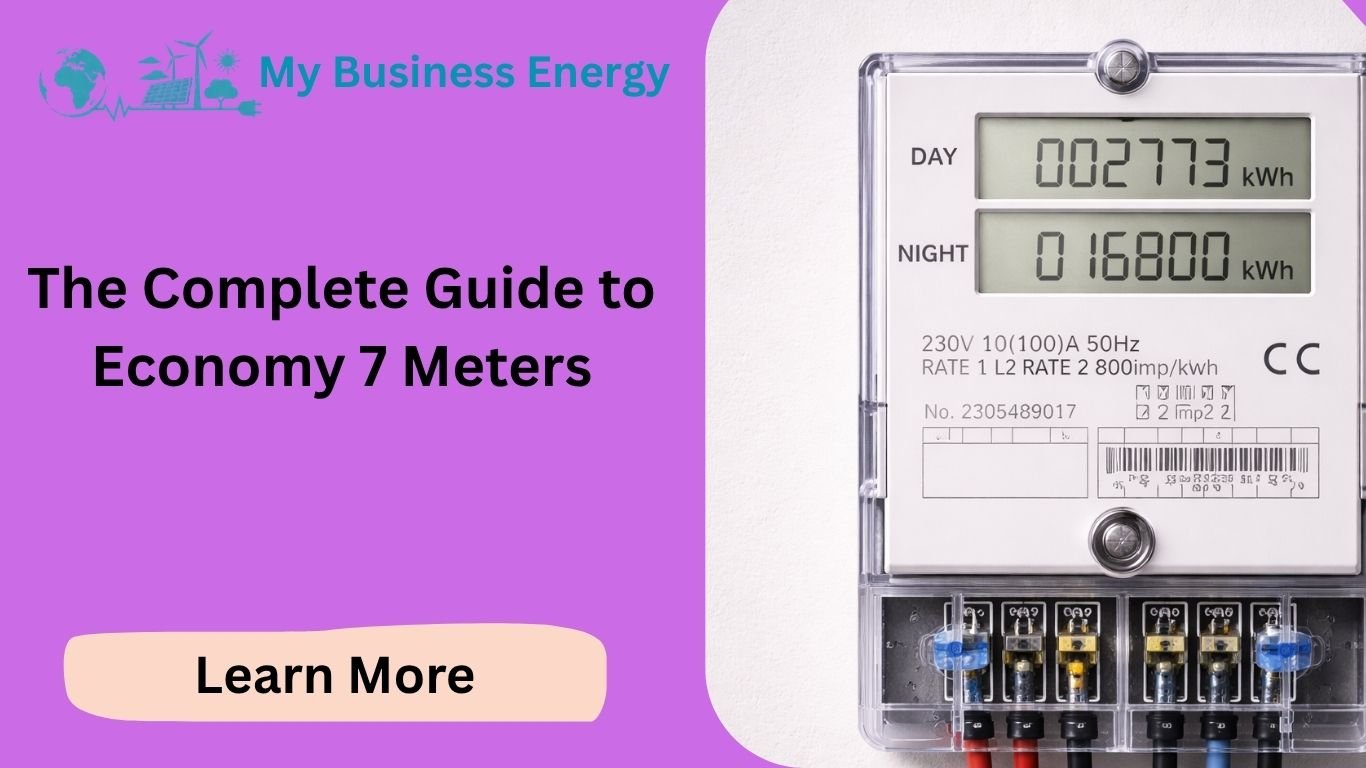
Unlike a standard single-rate meter, an Economy 7 metre has two displays or two separate rows of digits. These are typically labelled:
- Normal or Day — records electricity used during peak hours
- Low or Night — records electricity used during off-peak hours
To submit an accurate reading, note both figures separately and provide them to your supplier labelled correctly. Confusing the two will result in billing errors. Some older meters cycle between the two readings automatically, so you may need to wait a few seconds before both figures appear.
Pros of Economy 7 Tariff
- Lower Night-Time Rates: You are charged less for electricity when you use it during the nighttime, which directly helps you in saving your energy bills.
- Ideal for Electric Heating: You can pair it up with storage heaters or any other nighttime heating devices that heat up the room and store the heat until the daytime.
- Encourages Smart Energy Use: Using heavy energy like washing or dishwashing at nighttime
Cons of Economy 7 Tariff
- Higher Daytime Rates: Electricity consumed in daytime is priced higher than standard rates; hence, daytime consumption can reduce the amount of savings.
- Not Suitable for Everyone: If the majority of home electricity use is during the day, the savings may not be substantial.
- Appliance Timing Needed: It might be necessary to schedule or postpone the use of appliances, which could cause inconvenience.
How Night Rate Meter Saves Money on Energy Bills
An economy of 7 meters can help reduce your energy costs by offering cheaper electricity during seven nighttime hours. Here is how it works:
- Shift Energy Use to Night-Time
You can run electricity-intensive appliances like washing machines, dishwashers, or electric vehicle chargers at night. Since night-time electricity is cheaper, you pay less for the same amount of energy.
- Efficient Heating and Storage
Many households use storage heaters that heat up overnight. These heaters store heat and release it during the day, meaning you benefit from lower night-time rates while still keeping your home warm. - Lower Daily Energy Costs
Using some electricity during the day at standard rates is, of course, acceptable when you change or adjust most of your electricity use during the night, when the rates are lower and you will ultimately pay less for your overall monthly bill. - Smart Energy Planning
In fact, by monitoring your meter and adjusting your appliance usage times, you can schedule your electricity use to save the most on your energy costs while keeping lifestyle changes minimal.
Is Off-Peak Meter Right for You?
Economy 7 works best for:
- Homes with electric storage heaters
- Households with electric hot water cylinders
- EV owners who charge overnight
- People who work night shifts and use appliances during the day less frequently
- Homes without access to gas (all-electric properties)
It’s less suitable for:
- Households where most activity, and energy use, happens during the day
- Renters who can’t control what appliances or heating systems are installed
- Those unwilling or unable to shift appliance use to nighttime hours
A good rule of thumb: if you can’t reasonably move 40% or more of your energy use to off-peak hours, a standard tariff will likely serve you better.
Economy 7 meter VS Smart meter
Feature | Economy 7 Tariff | Smart Meter Tariffs |
Rate Structure | Two fixed rates (night & day) | Flexible — can be single rate or multiple time slots |
Night‑time Savings | Yes — if you use electricity at night | Yes — if on a time‑of‑use plan |
Daytime Price | Usually higher than standard rates | Daytime price depends on tariff chosen |
Billing | Manual or automated with smart meter | Automatically sent to supplier |
How Day-Night Meters Work for Businesses
A day-night meter charges for electricity based on two different rates at times of the day. Usually, commercial buildings pay a higher rate during the daytime hours when the demand for electricity is high and a lower rate at nighttime hours when the demand is low.
The meter automatically keeps track of the electricity used in each of the two periods by taking separate readings for day and night consumption. Energy companies then calculate the bill based on the amount of electricity used during each scheduled time. This system supports businesses to shift electricity-intensive activities to off-peak hours to reduce costs.
For example, this approach applies to businesses like restaurants and shopping malls. Operates heavy machinery Businesses can operate heavy machinery, such as cooling systems or charging equipment, during the more cost-effective nighttime hours. By doing this, companies can lower their overall electricity expenses and manage energy more efficiently.
Steps for Businesses to Move to an Economy 7 Tariff
- Check Usage – See if night-time hours can cover significant electricity use.
- Contact Supplier – Confirm Economy 7 availability and rates.
- Compare Tariffs – Ensure it will save money over your current plan.
- Upgrade Meter – Install or convert to an Economy 7 metre.
- Adjust Usage – Run high-energy equipment during off-peak hours.
- Monitor Bills – Track savings and energy usage regularly.
How to Get an Two-Rate Electricity Smart Meters for Your Home or Business
- Check with your current energy supplier whether they offer Economy 7 smart meters.
- If your existing meter isn’t compatible, request an upgrade—most suppliers offer this free of charge.
- Confirm the exact off-peak hours your supplier applies.
- Once installed, configure your appliances and heating systems to operate within the off-peak window.
- Use your in-home display (IHD) to monitor usage in real time and ensure you’re hitting your overnight consumption targets.
What is Economy 10?
Economy 10 is a variation of Economy 7 that offers ten hours of cheaper electricity instead of seven. Those ten hours are typically split across the day—for example, five hours overnight, two hours in the afternoon, and three hours in the early evening.
Economy 10 can be a better fit for households with higher daytime energy needs, as the split allows some cheaper-rate usage during daylight hours.
Difference Between Economy 7 and Economy 10
Feature | Economy 7 | Economy 10 |
Off-Peak Hours | 7 hours at night (usually 12 AM – 7 AM) | 10 hours total: 7 hours at night + 3 hours in the evening (e.g., 5 PM – 8 PM) |
Daytime (Peak) Hours | Remaining 17 hours | Remaining 14 hours |
Flexibility | Less flexible — only night savings | More flexible — night + evening savings |
Best For | Households using electricity mainly at night (heating, appliances) | Households using electricity at night and evening (heating, EV charging, evening appliances) |
How to Switch to Two-Rate Electricity Meter
First, determine whether your home or business can accommodate a dual-rate meter, and consider your electricity consumption pattern, particularly if you can take advantage of the cheaper nighttime electricity.
Then, get in touch with your energy provider and enquire if they have an Economy 7 offer. Confirming the night hours and whether standing charges will change is also important. If you agree, a professional technician will come and put in a dual-rate or smart Off-Peak Meter, often with no added cost to you.
Afterwards, check if your tariff is correctly set for both day and night rates and get familiar with reading your meter properly. The best way to achieve savings is to plan the use of main energy-consuming appliances like washing machines, dishwashers, and heaters during the cheaper, off-peak nighttime.
If you keep to these guidelines, you will be able to switch to Economy 7 and lower your electricity bills effectively.
Is Economy 7 Worth It in 2026?
Economy 7 remains a viable option for the right households—but it’s not the automatic money saver it once was. Energy prices have shifted significantly in recent years, and the gap between peak and off-peak rates varies considerably between suppliers.
For EV owners, the case for Off-Peak Meter (or a similar time-of-use tariff) is stronger than ever. Overnight vehicle charging is one of the easiest ways to make the tariff work in your favour. Similarly, all-electric homes with storage heating stand to benefit meaningfully.
For the average household that runs appliances throughout the day, Economy 7 requires genuine behavior change to deliver savings. Any overnight gains could be easily wiped out by the higher daytime rate without that commitment.
The bottom line: Economy 7 rewards those who plan around it. If your lifestyle—or your business operations—align with overnight energy use, the savings are real and consistent.
Conclusion:
Two-Rate Electricity Meter might still be an acceptably priced choice in 2026, but how beneficial it will be actually depends on when you use electricity. Those houses or commercial premises that are able to move a great deal of their power consumption to nighttime, time off, or off-peak periods, e.g., operating machines, electric vehicle charging, or electric heating through storage heaters, are going to benefit quite a lot from the savings.
If households or businesses primarily consume power during the day, they may find that the high daytime rates negate any potential savings, leading to a higher overall electricity cost for those who do not adjust their consumption behaviour. With the transition to smart meters, customers will have a better way to track usage and maximise savings.
Economy 7 is a tariff that provides cheap rates for electricity during off-peak hours, which are times when demand is lower; thus, it is a useful option for those who plan their power usage in a calculated method.
if you Learn About Business Electricity Guide Please Visit Our Website.
FAQS
Here are some helpful answers to the most common questions people ask before choosing a day and night electricity tariff.
Q1: What appliances are best to use during Two-Rate Electricity Meter hours?
Appliances like washing machines, tumble dryers, dishwashers, immersion heaters, and electric vehicle chargers are often best used during off-peak hours to reduce bills.
Q2: Does Economy 7 work with smart meters?
Yes, some smart meters can support Economy 7 tariffs. Your supplier can confirm whether your current smart meter is compatible.
Q3: Is Off-Peak Meter better than a standard electricity tariff?
It depends on how you use electricity. If most of your usage happens during the day, a standard single-rate tariff may be better. If you use more power at night, Economy 7 may be the cheaper option.
Q4: Can I switch to an Economy 7 meter?
Yes, many energy suppliers can help you switch, but it depends on your property, meter type, and whether Economy 7 suits your usage pattern.
Q5: Can tenants use an Economy 7 meter in rented homes?
Yes, tenants can live in a property with an Economy 7 meter, and in some cases they may also be able to switch to or from an Economy 7 tariff. However, this depends on the tenancy agreement and the landlord’s approval, especially if the change involves meter replacement or changes to the heating setup. If the property already has storage heaters or a dual-rate meter, the tenant may simply choose a suitable tariff from an energy supplier. It is always wise to check with the landlord before making changes.