Business Electricity Rates UK: Costs, Tariffs & Savings Guide
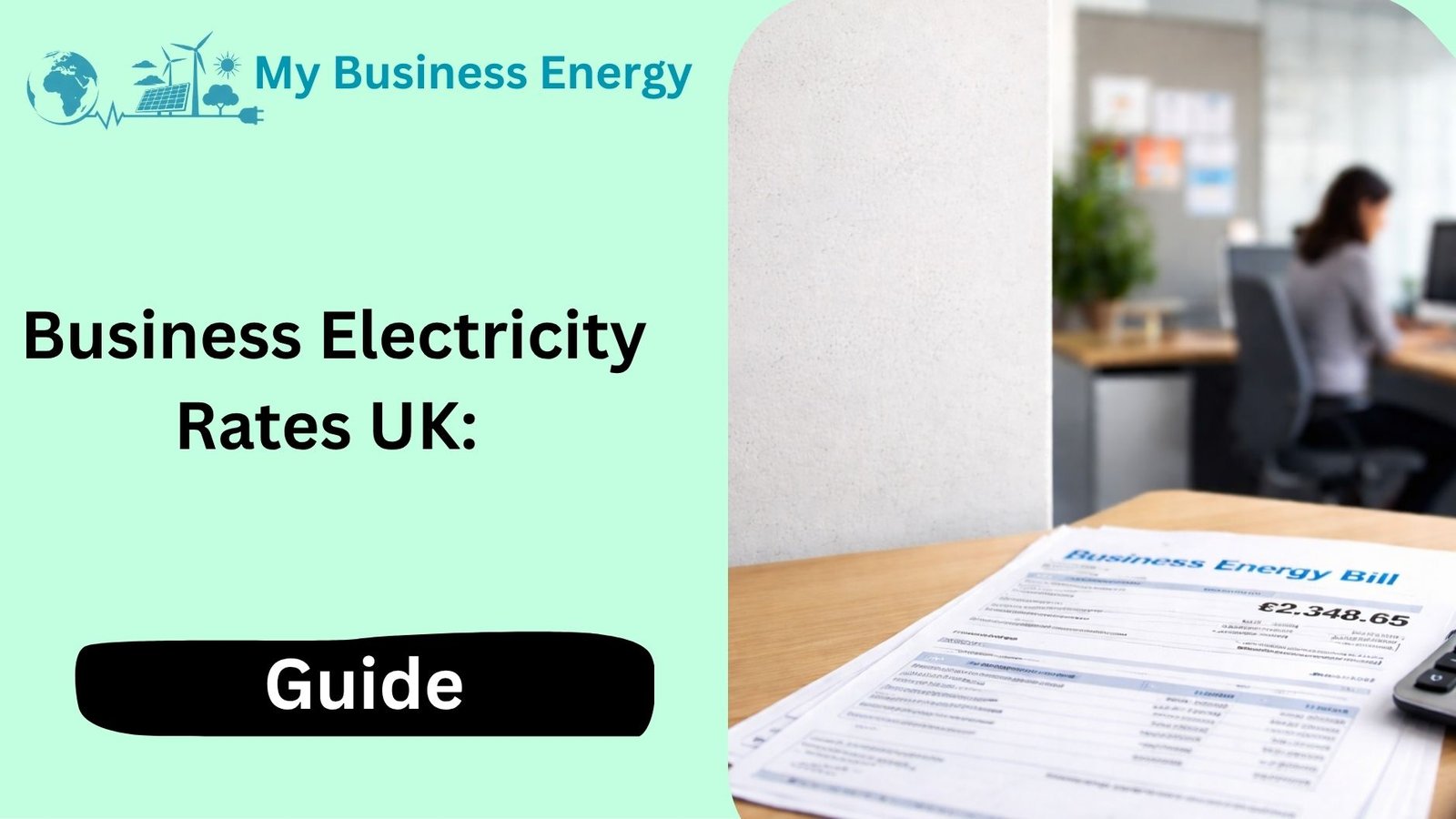
Business electricity rates in the UK play an important part in determining how much companies pay for their energy consumption. Whether you run a small business or a large enterprise, understanding commercial electricity rate in the UK can help you manage costs more effectively and choose the right energy deal. These rates vary based on factors such as usage, location, and contract type, making it essential for businesses to stay informed.
In this guide, we will break down everything you need to know about business electricity rates in the UK, including average costs, key factors, and ways to secure the best deal for your business.
Table of Contents
What Are Business Electricity Rates?
Business electricity rates refer to the prices energy suppliers charge commercial entities for the power they consume. Commercial agreements differ from domestic energy contracts in that they cater to the specific needs and size of the company.
Suppliers treat commercial electricity rates in the UK differently from residential rates. Businesses generally consume much more power, meaning they can often negotiate better unit rates.
However, business contracts are typically binding for a set period. In addition, they do not include a cooling-off period, so choosing the right plan from the start is crucial.
How Commercial Electricity Rate Are Calculated
Suppliers calculate your rates based on a combination of your estimated annual usage and market conditions.
First, they look at your half-hourly meter data or historical billing information. This helps them understand your consumption patterns, such as whether you use more power during peak or off-peak hours.
Next, they factor in non-commodity costs. These include government levies, distribution network charges, and transmission costs, which can make up a large portion of your final bill.
Basic Formula
Total commercial electricity bill = (Electricity usage × unit rate) + standing charge + Climate Change Levy + VAT
You can break it down like this:
Electricity usage cost = kWh used × unit rate per kWh
Standing charge = daily standing charge × number of billing days
Climate Change Levy = kWh used × CCL rate
Subtotal = usage cost + standing charge + Climate Change Levy
VAT = subtotal × VAT rate
Final bill = subtotal + VAT
From 1 April 2026, the UK Climate Change Levy rate for electricity is £0.00801 per kWh. For most business electricity use, VAT is usually charged at the standard rate, while reduced VAT rules may apply in limited cases such as domestic/residential use, charity non-business use, or small-scale qualifying use.
Example
Let’s say a small UK shop uses 2,000 kWh of electricity in one month.
Unit rate: 24p per kWh
Standing charge: 60p per day
Billing period: 30 days
Climate Change Levy rate: £0.00801 per kWh
VAT rate: 20%
Average Business Electricity Rates in the UK (2026)
Forecasting the average business electricity cost in the UK for 2026 involves looking at current market trends and wholesale energy prices. Energy markets remain somewhat volatile due to global supply chain shifts.
Industry experts project that electricity cost per kWh for UK businesses will stabilize compared to previous peak years. However, businesses should still expect rates to be higher than pre-2020 averages.
Currently, a micro-business might see an average unit rate of around 25p to 30p per kWh. Medium and large businesses often secure slightly lower unit rates due to their higher consumption volume.
Types of Business Electricity Tariffs
When searching for business energy tariffs in the UK, you will encounter several different contract types. Selecting the right one depends on your risk tolerance and operational needs.
- Fixed-rate tariffs: These lock in your unit rate for the duration of the contract, protecting you from sudden market price hikes.
- Variable-rate tariffs: The unit rate fluctuates based on wholesale market prices, which can save you money when costs drop but exposes you to risk if they rise.
- Deemed rate contracts: If you move into a new premises and use energy without agreeing to a contract, you will be placed on these expensive default rates.
- Rollover contracts: If you do not switch or renew at the end of your term, suppliers automatically roll you onto a new, often more expensive, contract.
- Green tariffs: These plans ensure that some or all of your electricity comes from renewable energy sources.
Commercial Electricity Standing Charges Explained
Your energy bill consists of two main parts: the unit rate and the standing charge. The standing charge is a fixed daily fee that you pay regardless of how much electricity you use.
This fee covers the cost of maintaining the energy network, keeping your premises connected to the grid, and meter maintenance.
Therefore, when comparing business electricity rates in the UK, you must look at both the unit rate and the daily standing charge to understand the total cost.
How to Compare Business Electricity Rates
Comparing UK business energy prices does not have to be a complicated process. Working systematically will help you find the best value.
- Gather your details: Have your current bill, annual consumption figures, and MPAN (Meter Point Administration Number) ready.
- Use a broker or comparison site: These services can quickly scan the market and present quotes tailored to your business profile.
- Check the total cost: Do not just look at the unit rate. Calculate the estimated annual cost including standing charges.
- Review the terms: Pay close attention to the contract length, renewal terms, and any early exit fees.
How to Reduce Business Electricity Costs
Securing a favourable rate is only one part of managing your energy expenses. Reducing your consumption is equally important.
Start by conducting an energy audit of your premises to identify areas of waste. Simple changes, like switching to LED lighting and installing motion sensors, can make a noticeable difference.
Furthermore, encourage your staff to adopt energy-saving habits. Turning off computers and equipment at the end of the day reduces costly phantom energy drains.
Fixed vs Variable Business Electricity Rates
Choosing between fixed vs variable business electricity rates is crucial for managing your energy costs, as each option offers different levels of price stability, flexibility, and financial risk.
| Feature | Fixed Business Electricity Rates | Variable Business Electricity Rates |
Price Stability | price (locked for contract period) | Prices change with market conditions |
Cost Predictability | Easy to budget and forecast | Bills can be unpredictable |
Contract Length | 12 to 36 months (typical) | Usually no long-term contract |
Best For | Businesses needing stability | Businesses comfortable with risk |
Future Trends in UK Business Electricity Price
UK business electricity prices are likely to remain sensitive to wholesale energy markets, network charges, policy costs, and contract timing. Unlike domestic customers, businesses are not protected by the Ofgem energy price cap, so commercial electricity rates can change more sharply when contracts are renewed.
1 Wholesale prices may remain unstable: Business electricity prices are still affected by gas prices, global energy demand, weather conditions, and geopolitical risks. Even if prices fall in some periods, businesses should expect possible fluctuations when renewing contracts.
2 Non-commodity costs may become more important: Future bills may be shaped less by wholesale electricity alone and more by network charges, policy costs, and system balancing costs. Cornwall Insight forecasts that non-commodity charges could make up nearly 60% of a typical business electricity bill in 2026.
3 Standing charges and network costs may rise: Businesses should not only compare the unit rate per kWh. Daily standing charges and distribution-related costs may also affect the final bill, especially for small businesses with lower electricity usage.
4 Flexible and time-of-use tariffs may become more common: As smart meters, battery storage, and demand-side flexibility grow, more businesses may move towards tariffs where electricity costs vary by time of day. Businesses that can shift usage away from peak hours may reduce costs.
Common Mistakes Businesses Make
Businesses often pay more for commercial electricity because they do not check the full details of their energy contract. Here are some common mistakes to avoid:
Only checking the unit rate: Many businesses focus only on the price per kWh, but the standing charge can also increase the total bill.
Ignoring the standing charge: A low unit rate may look attractive, but a high daily standing charge can make the overall cost more expensive.
Not understanding peak usage times: Businesses that use more electricity during expensive periods may face higher costs, especially on time-of-use tariffs.
Choosing the wrong contract length: A very short contract may expose the business to price changes, while a very long contract may lock it into an expensive rate.
Conclusion
Understanding business electricity rates in the UK is essential for any company looking to control energy costs and improve efficiency. With rates varying based on usage, contract type, and market conditions, staying informed can make a significant difference in your overall expenses.
By comparing suppliers, choosing the right tariff, and avoiding costly deemed rates, businesses can secure better deals and reduce their energy bills. Ultimately, clearly understanding commercial electricity rates in the UK helps you make smarter decisions and ensures long-term savings for your business.
For more detailed guides and the latest updates, explore our Energy Guide.
FAQs
Here are some common questions businesses ask about business electricity rates in the UK:
Q1. What affects business electricity rates in the UK?
Here are some Key factors include:
Energy usage
Location
Type of tariff
Contract length
Wholesale energy prices
Q2. How often do business electricity rates change in the UK?
Business electricity rates can change frequently depending on wholesale energy prices, market demand, and global energy trends.
Q3. Are there any government schemes to support business energy costs?
Yes, the UK government occasionally provides support schemes or relief programs to help businesses manage high energy costs.
Q4. How long are business electricity contracts in the UK?
Most contracts typically range from 1 to 5 years, depending on the supplier and tariff chosen.
Q5. Can I negotiate Commercial electricity rates with suppliers?
Yes, many suppliers offer flexible pricing, and businesses can negotiate better deals based on usage and contract length.